05/15/13

Free Zombie Music

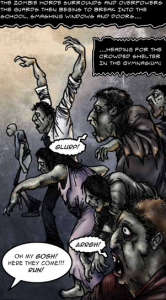
Holy crap, is that Slender Man in the background?

It’s Zombie Awareness Month and what better way to celebrate than with free zombie music? That’s why I’ve gathered up 13 terror tracks inspired by (or relating to) the living dead for you to enjoy. Just click on the left link for the free download and click on the right for the artist’s official website:

“Re: Your Brains”Jonathan Coulton
“Zombie Blues”Tom Smith
“Zombie​-​and​-​B”Tom Smith
“Zombies Rise”Darkmood
“Zombie-otic”SDM
“Radioactive Zombies”Jamey Rottencorpse and The Rising Dead
“Walking Corpse”Grave Tone Productions
“ZombieTown”Ray O’Bannon
“Happy Little Zombies”Ray O’Bannon
“Zombies Can Has Cocoa”Ray O’Bannon
“Zombie Hoodoo”Kevin MacLeod
“Zombie Chase”Kevin MacLeod
“Bent and Broken”Kevin MacLeod

I know that last one might seem like an odd choice to you, but the artist says it’s a zombie song. Read this if you don’t believe me. But wait, there’s more! In addition to the three tracks listed above, Ray O’Bannon also offers free printable CD sleeves (perfect for storing your copy of this album) and tons of other goodies. What kind of goodies? Goodies like zombie masks, zombie miniatures (complete with playsets) and more!

Special thanks to the CDC for the open source image (and to Bob Hobbs for creating it)!

04/27/13

Flow Like Poe

Are you an Edgar Allan Poe fan in need of some fun? Or perhaps you’re in need of the way to make learning about writing in iambic pentameter that’s both entertaining and easy to understand? In any case, all you need to do is watch the music video for MC Lars’ song “Flow Like Poe” from his The Edgar Allan Poe EP album thanks to the official MC Lars YouTube account:

According to its description, the above video was first shown in New York’s famous Carnegie Hall as part of the Scholastic Art and Writing Awards in 2012 (The same year he released The Edgar Allan Poe EP). In case you’re wondering, the classical music sample is from Johann Pachelbel’s “Canon in D” and you can purchase the same kind of raven puppet seen in the video here. I know the picture there looks different than what you’d expect but trust me, it’s the same type of puppet.

Earlier this year, MC Lars teamed up with MC Ohm-I to release a remix of “Flow Like Poe” as part of The Ill Remix EP Vol. 2. It’s just as insanely catchy as the original and can be downloaded for free (along with some other cool tracks) here.

01/24/13

Second Grave, SECOND GRAVE

Second Grave
Official Site
Second Grave, Second Grave Recordings 2012

Audio clip: Adobe Flash Player (version 9 or above) is required to play this audio clip. Download the latest version here. You also need to have JavaScript enabled in your browser.

Behind the Red Door

The story of Second Grave begins with a simple conversation. Chuck Ferreira was speaking with fellow musician Krista Van Guilder and offered his skills as a drummer if she ever wanted to team up for a future project. Although it took awhile for that time to come, she did take him up on his offer. Since their vision required more than just a drummer and a frontwoman/guitarist could provide, both guitarist Chris Drzal (who previously worked with Krista in Obsidian Halo) and bassist Dave Gein were also recruited and Second Grave was born. Despite the band being fairly new (They made their first appearance in August 2012), they’re far from inexperienced. Krista Van Guilder also performed with Warhorse and Lucubro, Chuck Ferreira played in Nodscene, Chris Drzal was part of Suckapunch and Dave Gein put the “Gein” in “Gein and the Graverobbers” in addition to his current work in Black Pyramid!

“Great opening” best describes “Through the Red Door,” both in terms of starting the album and the song’s actual opening. The whispering wind effect at the beginning (and end) is very atmospheric and works extremely well with the echoing guitar work. But although that track is great, it’s actually “Covet” that acts as an introduction to the group’s style. After a moody soft opening and instrumental buildup, everything revs up as a prelude to Van Guilder’s effective vocals. “Mountains of Madness” is one of my favorite tracks, thanks to it being both catchy and apocalyptic. Everything is perfect in this-the drums, the guitars and the vocals (throaty growls thrown in for good measure towards the end). I especially appreciate how it manages to capture the feel of Lovecraft’s work without resorting to Mythos name-dropping.

Soft guitars get the spotlight in the instrumental track “Salvation,” which starts off “folksy” and then takes on a medieval ballad feel. Its calm and soothing nature makes it both short but sweet and a musical palate cleanser. “Soul Extinction” is another favorite of mine. As you can hear for yourself above, everything is just right (at least by my standards) and there’s an amazing vocal performance to boot. In “Divide and Conquer,” the percussion seems to be star of the opening. Although some might find the low key guitar work during the song’s midway slowdown to at odds with the rest of the track’s heavy tone, I think that the contrast not only works, but also adds some distinctive flavor the the track. In other words, it’s the perfect closing to the album.

My experience with metal is admittedly limited; I’m only familiar with Thor, Dethklok and a handful of other bands. As you can expect, the seemingly endless amount of subgenres of metal are largely a mystery to me. But if Second Grave represents what doom metal is like, then sign me up for more!

Second Grave has made one hell of a first impression in their self-titled debut album. As an EP, this “only” has
six tracks and runs a little over a half hour. But believe me, you’re getting more than your money’s worth here. The majority of the tracks are rather lengthy (but never overstay their welcome) and you’re sure to find something you’ll like. What else can I say? It good. Me like. You buy. NOW.

But Second Grave isn’t going to rest on their laurels and has lots of plans for 2013. They are going to play with bands like Pilgrim, Lord Fowl, Gozu and Black Thai, in addition to opening for Castle when they tour through New England. They’ve also scheduled to play at the Stoner Hand of Doom festival and have plans for both a vinyl LP release and a follow-up album later in the year. So keep on eye on this band; I see great things in their future.

Special thanks to Second Grave for use of the image!

12/23/12

Winter’s Majesty

Nox Arcana
Official Site
Winter’s Majesty, Monolith Graphics 2012

Oh Gunter, I can't wait to show Finn and Jake my new look.  The princesses are going to be all up ons once they see my sweet abs!

Back when I reviewed Winter’s Eve, I teased the upcoming release of the third (and final) installment of Nox Arcana’s “Winter” series. I’m happy to report that both Jeff Endemann and the Gregorian Shadow Choir have returned for this album. Those fond of the wordless female vocals that have shown up in past Nox Arcana albums will be happy to hear how practically every song on the album uses them.

While most Nox Arcana albums have the spoken word introduction and opening song presented as two separate tracks, Winter’s Majesty bucks tradition by combining both! In “Aquilon’s Wish,” the Gregorian Shadow Choir backs the opening poem of the Winter King’s wish for peace on earth, which gives way beautiful snowflake-like chiming and piano work. It takes a somewhat darker tone later on, but is still beautiful. Interestingly enough, there’s a seemingly alternate version of the introduction performed by John Rossi available online. “Tranquility” definitely lives up to its name, with the medieval ballad-style instrumental segment and the backing strings being great touches. Personally, the music makes me think of snow quickly falling. “White Woodlands” masterfully combines piano work and chiming tones that remind the listener of snow, while “Secret Sanctuary” has an overall ballad feel. Both the wordless female vocals and tambourine add to the feel of the dark beauty of a winter’s night, while the piano ushers in a somewhat darker feel and unisex choir work. The organ and tolling bells of “Summon the Wind” give the track a Dracula-style feel, while “Snow in the Shire” has a wonderful ballad feel thanks to its use of a minstrel guitar and touches of tolling bells and a tambourine. Despite the name, the latter has no connection to the works of J.R.R. Tolkien. The word “shire” is actually a traditional English term for what would now be referred to as a “county.” “Crystal Kingdom” combines excellent soft piano work with some tolling bells while “Solstice Spirits” gives the listener as sense of falling snow thanks to its chime-like tones and piano work. “Shelter from the Cold” is much more energetic than previous tracks, although it does have a ballad-like feel to it at times. “Angels in the Snow” slows things back down in a good way.

“Scarborough Fair” is a new take on classic song. Despite being commonly associated with Simon & Garfunkel, it’s actually an ancient folk ballad that has numerous alternate versions with different lyrics. For this new version, Vargo has replaced most of the lyrics (including the famous “Parsley, sage, rosemary, and thyme” refrain) so that the song now tells the tale of a spirit telling the listener to seek out his lover from when he was alive so she can visit his grave. Jeff Endemann gives an amazing vocal performance, with the opening ballad feel and tambourine work adding to overall feel. In addition to its connection to an earlier track by mentioning a shire, the online music video suggests a connection to Winter’s Knight. “Ivory Steeds” offers speedy and varied piano work with touches of bells while “Winter Haven” combines gentle snow chimes soft and piano notes with the strums of a minstrel guitar. In “Forest Lullaby,” gentle notes are joined by “chimes” to create a soothing, music box-like feel. The piano work of “Days of Olde” is noticeably different in tone than that of the past tracks. The unisex choir and snow-like chiming add to it overall feeling of long ago. “Saturnalia” refers to the festival that celebrated the winter solstice in ancient Rome. In fact, Christmas as we know it today has some of its roots in Saturnalia! The track has a definite celebratory feel thanks to its clapping hands and flutes, along with some tambourine and violin work. “The Coming of the King” uses a unisex choir backed by an organ and tolling bells to provide a sense of dark regality. Pounding drums also add to the effect. Although “Winter’s Majesty” uses soft piano work and bells, the piano is the real star here. There’s also lots of great musical variations. “We Three Kings” is an instrumental take on the Christmas classic, realized with soft piano and minstrel guitar (along with touches of bells). “Polaris” uses a different way of conveying falling snow via piano and soft vocals. “Final Peace” has a peaceful but somewhat mournful tone thanks its use of a violin and unisex vocals. Those who wait for the secret track will also hear the sounds of wind and soft piano work.

As with all Nox Arcana releases, the liner notes contain the lyrics and amazing artwork (along with a hidden puzzle). In fact, some of the pages are styled not unlike the illuminated manuscript look used for the liner notes for Winter’s Knight. All in all, Winter’s Majesty offers a return to the dark feel of Winter’s Knight, while still retaining the lighter elements of Winter’s Eve. Although I’m sad to see the series end, I’m glad it got to close out with an album like this.

Special thanks to Monolith Graphics for the review copy!

12/22/12

Freaky Tiki Surf-ari: King Kukulele and the Friki Tikis

King Kukulele and the Friki Tikis
Official Site
Luau In December, Friki Tiki Records 2008

Audio clip: Adobe Flash Player (version 9 or above) is required to play this audio clip. Download the latest version here. You also need to have JavaScript enabled in your browser.

Hey, you on the right.  Show some class.  I know the hula girls are gorgeous, but come on...

Even if you’ve never heard one of their albums before, chances are that you’re already aware of King Kukulele and the Friki Tikis. Although active for quite some time on the West Coast, King Kukulele officially made his presence known to the rest of the country at the Hukilau in 2002. The following year, his Tiki Palace made quite a splash online and has been hosting the Tiki Tot Tour at Tiki Oasis in recent years. But who are they? The members of King Kukulele and the Friki Tikis consist of:

King Kukulele (Denny Moynahan): Lead vocals and ukelele
Riki Kontiki (Richard Fultineer ): Drum kit, percussion and backup vocals
Malahini Marc (Marc Doten): Double bass, guitarron, glockenspiel and backup vocals
Waikiki Wakefield (Jeremy Wakefield): Lap steel guitar and backup vocals
Bora Bora Bonebrake (DJ Bonebrake): Marimba and vibraphone

Although their self-titled 2004 release was their first CD, 2008′s Luau in December is (as of this writing) their most widely available album. Although the concept may seem kind of odd at first, it actually makes perfect sense. Exotica music takes its listeners on relaxing journeys to faraway places, which is perfect for combating holiday stress and the cold weather blues. In addition to original songs, there are also several exotica versions of Christmas classics. From what I can tell, this album seems to be the first exotica Christmas album of the modern era!

“Luau In December” tells us to trade our eggnog for Mai Tais in this lively, but somehow mellow, tune. King Kukulele’s pleasant voice is well-teamed with the marimba, percussion and steel guitar percussion. A child singing about a greedy young boy’s Christmas expectations in “Brand New Ukulele,” but Kukulele takes over to tell us of the one special gift that changed the lad’s attitude as the extremely catchy backing music picks up. I’m not kidding about it being catchy, either. I can practically guarantee that you’ll catch yourself singing this for days after hearing it. “Santa’s Menehune” deals with a legendary Hawaiian creature that is claimed to have amazing building skills. Naturally, this comes into play when he goes to visit his elven cousin at the North Pole. It’s a cute song thanks to its Chimpmunk-style voices and amusing appearance by “Elf-vis.” The late, great “Duke of Uke” himself, Bill “Tappy” Tapia takes over the singing and ukelele duties for “Tappy Claus.” Backed by a steel guitar, Tappy denies being Santa Claus and recounts his constant bad luck with gifts over the years. It’s a real treat to hear the legend in action and although the song’s reference to over 100 years of bad gifts might seem like a joke, he actually had reached that age at the time the song was recorded! In “Christmas Luau,” the ukelele and steel guitar nicely back this musical tale of a Hawaiian Christmas (which also foreshadows the next track). Those learning about various Hawaiian terms will find this song especially invaluable in their studies. Just don’t listen to it while you’re hungry. Trust me on this.

“The Night Before Christmas” combines sleigh bells and vibraphone work as special guest Laura Thatcher joins King Kukulele in singing this holiday classic while the heavy introduction of “You’re a Mean One, Mr. Grinch” leads to the marimba getting quite a workout with some great ukelele and steel guitar work. “I Work for Santa Claus” has a surprisingly Latin-esque feel thanks to its use of a guitarrón. In it, an elf sings about his job duties and the incredibly chain of mishaps that occurred the night Blitzen lost one of his hors…er…reindeer shoes. There’s also a very welcome reference to the Krampus. What’s not to love? While many traditional exotica songs combine music and animal noises, “Santa’s Workshop” couples vibes and percussion with the sounds of toys being made. This gives the song about toy building an appropriately soft and magic feel. The Friki Tikis’ take on the Yule standard “Rudolph the Red Nosed Reindeer” features incredible drum work here, along with a wonderful instrumental interlude with a steel guitar and marimba. “Reindeer Holiday” is a charming ukelele tune about Santa’s reindeer and their unscheduled Hawaiian vacation, which has a closing vocal harmony segment that is not to be missed. The Tiki rock take on “Hooray for Santa Claus” is simply amazing and is easily one of my most favorite tracks from the album. If you’ve ever cringed whenever the original version of this song played in Santa Claus Conquers the Martians, you need to hear this version. Yesterday. “Thirty-Two Feet and Eight Little Tails” is a peppy musical tribute to the eight tiny reindeer pulling ol’ St. Nick’s sleigh, complete with a great vibraphone lead out. “Mele Kalikimaka” is Hawaiian for “Merry Christmas.” It’s also the name of the album’s final track, which is both faithful to the original version while providing enough of its own distinctive touches to make it feel like more than “just a cover.” Like any good holiday special, this track features plenty of guest performers. Joe Moe (who previously appeared on the album as the lead vocals for “Christmas Luau”) provides the harmony vocals while Ali Lexa handles the lead ukelele duties.

Luau In December will be enjoyed by people of all ages (especially fans of SpongeBob SquarePants) and is a highly recommended purchase. It’s also proof positive how something that’s “family friendly” doesn’t necessarily have be sappy or talk down to its listeners. I, for one, am eagerly awaiting what King Kukulele and the Friki Tikis have to bring us in the future. If it’s anything like this album, then we’re all in for a real treat.

Special thanks to Friki Tiki Records for the review copy!

10/31/12

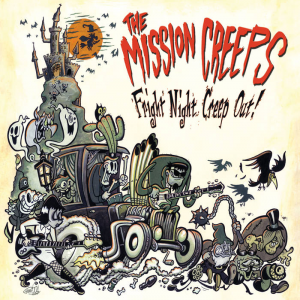
The Mission Creeps, HALLOWEEN

The Mission Creeps
Official Site
Halloween, Refractory Records 2012

Audio clip: Adobe Flash Player (version 9 or above) is required to play this audio clip. Download the latest version here. You also need to have JavaScript enabled in your browser.

Whatta mean 'Where's the haunted house?,' it's right there dummy!

For those of you who missed my first article about The Mission Creeps, I’ll explain. Although well-known for their particular brand of dark surf music, it’s not unusual for them to switch genres and styles several times over the course of a single album. Their newest release, Halloween, is no exception. It “only” has nine tracks, but I can guarantee that both the length and quality of said tracks more than make up for the relatively small number of tracks

“Halloween (Theme)” kicks things of nicely with howling wind and a distorted voice that lead us into this musical tribute to the best holiday ever. Not only that, but the catchy guitar work and wailing backing vocals kick all sorts of ass. “Witches” has a kind of a dancey, somewhat Twilight Zone-like feel to it and introduces a technique that reoccurs several times over the course of the album: the use of two distorted voices repeating a selection of creepy phrases. In fact, “Dragging the Body” demonstrates this nicely as one voice orders someone to “drag this body to my laboratory” while a robot voice says “I’m the servant” over a theremin. While other horror bands are content to only sample horror movies, the Mission Creeps set themselves apart by creatively using actual recordings from a Southern Arizona Ghost and Paranormal Society investigation of the Oliver House & Hotel in Bisbee, Arizona in the next track. “The Plum Room (with Sounds from a Real Ghost Investigation)” refers to the hotel’s infamous “Plum Room” and features some great light guitar and drum work. “Space Probed” showcases both the band’s dark surf skills and distorted versions of our two favorite spooky voices. Said voices are at their best in “The Butcher,” where the more authorative one issues commands like “Move along, America is hungry,” “Stun the animal” and “Bring me my cleaver” (to name only a few) and the secondary voice sounds like a demonic Err that adds its own comments on the matter. The sheer bizarreness makes one almost forget about the excellent guitar and drum work. Although we hear cows mooing, some of the commentary (and this Wondershowzen-esque music video) imply that humans are actually on the menu.

The final song, “Cross Over,” has a rather electronic feel to it due to the “boop boop” music that plays while the singer says “You need to cross over.” Although this is the final song, it’s not the final track. Given that the album is devoted to Halloween, it makes perfect sense to include a scary story. “Shadow: A Parable (Edgar Allan Poe: 1835)” features the spooky tale of an encounter with a ghostly being in a room being read by a deep voiced male narrator, with eerie backing music and wind effects softly playing as well. The final track is another Halloween staple: spooky sound effects! That’s right “Land of the Departed (Haunted House Soundtrack)” is a half hour soundscape full of ghostly moans, thunder, creaking doors, snakes, cats and more! It’s like an upgraded version of those spooky sounds CDs you can find everywhere this year and its running time makes it perfect for looping (especially if you play it while playing out candy tonight).

In short, this album is a must-have for fans of great music and Halloween chills. You can enjoy the music all year round while saving the other tracks for use in October. In fact, I wouldn’t mind hearing more ghost stories and soundscapes from the Mission Creeps either! You can also read more about the creation of this album by reading this article on the matter.

I have always shared a music video in every past Halloween countdown and this year is no exception. So, direct from the official Mission Creeps Youtube channel comes the group’s video for “Halloween (Theme)”:

Special thanks to The Mission Creeps for the review copy!

Happy Halloween!

10/30/12

Music to Haunt By: Verse 13

Verse 13

Official Site

Memories from the Grave, Dark Owl Records 2012

Audio clip: Adobe Flash Player (version 9 or above) is required to play this audio clip. Download the latest version here. You also need to have JavaScript enabled in your browser.

V13 via GdL16

Like many of the artists covered in this year’s review series, Verse 13 is a relative newcomer to the world of spooky atmosphere music. Founded by Las Vegas, Nevada resident Mike Fox in 2010 with the release of Prelude to the Afterlife, Verse 13 quickly gained lots of praise. In fact, the track “The Netherworld Circus” was even used as a promotional theme for the TerrorKlowns comic book series. While Prelude to the Afterlife offered a varied selection of musical styles and was influenced by everything from Danny Elfman to 80′s horror movies, Memories from the Grave marks the first time Verse 13 has done an album where all the tracks are connected by a single storyline.

Things start off with the titular “Memories from the Grave,” whose eerie piano work goes nicely with the distorted child’s voice and knocking. “Voices in the Attic” has an intense, rockin’ feel that offers much potential for an area where costumed performers chases visitors to your haunt. “Silhouetted” makes great use of a spooky piano and faint female vocals, along with nice use of a gong while “Unfinished Business” makes use of pounding music (especially percussion) for another track that implies chasing or pursuit. The light piano work of “Residual” has a sinister feel and “Did You Hear That?” combines faint moans and slow ascending piano notes. “Hands Vermillion” utilizes pounding notes and percussion for its opening, which is then followed by a great combination of piano and organ work. If you’re looking for tracks that suit certain setups, “Cold Spot” is almost circus-like in feel (but still has spooky touches) while the creepy organ work that follows the drum buildup in “Villa Montezuma” is perfect for a phantom organist display. The mournful tone of “Cemetery Moonlight” is enhanced by its decidedly (and intentionally) “off” piano work being mixed with some great sound effects. The ringing bells that start “The Doll Maker” lead to a plinking music box and wordless female vocals that make it perfect for any scene involving spooky dolls.

The soundscape “Buried in the Walls” has plenty of digging sounds, along with some growls in distance while in “As Black As Pitch,” a combination of pipe organ, bells and drums goes together extremely well. “The Child’s Keepsake” mixes a music box and heartbeat, then adds a piano and wordless female vocals. Similar vocals appear in the pounding melody of “Crypt of Gypsies,” along with bells, organ work and creepy musical stings. “Unpleasant Dreams” is perfect for a haunted children’s room thanks to the sound of a crying child (and various scary effects) being used in harmony with a music box. The soft, slow musical build at the beginning is very effective at building a sense of unease. The melancholy tone created by the violin, bells and piano work of “Torn Asunder” are well-suited for any funeral scene in your haunt. “Blighted” offers more chase scene potential thanks to its scary, driven feel created through the use of bells, drums and string work. The slow piano work of “She Still Roams” is aided by the touches of distant conversations and breathing effects. “The Candelabra Dims” features both a children’s choir and wordless male vocals, and the bell work picks up with a violin and piano. As for “It Followed Us Home,” well, you’ll have to pick up a copy of the album in order to truly appreciate this one.

Memories from the Grave has numerous tracks that, while distinctively spooky, offer uses in a wide selection of spooky scenes and displays. In fact, I would go as far to say there’s not a single bad track on it. In addition to each track being well-suited to individual looping, it also works well played in a loop at your house on Halloween night. Here’s hoping that we won’t have to wait another two years for the next album, as I’m sure it will be amazing.

Special thanks to Verse 13 for the review copy!

10/29/12

Music To Haunt By: Carnival of Lost Souls

Nox Arcana

Official Site

Carnival of Lost Souls, Monolith Graphics 2006

Audio clip: Adobe Flash Player (version 9 or above) is required to play this audio clip. Download the latest version here. You also need to have JavaScript enabled in your browser.

That one spirit looks waaaay too happy to be that close to a horse's ass...

I know what many of you are thinking. “This is just going to be spooky circus music and I can skip this album without any worry since I’m not using a clown theme at my haunt.” I’ll admit it, I tend to avoid circus-themed haunt albums for the same reason. Given that I already have one such album, my tastes tend to lean towards soundtracks that can be used in a variety of haunts. That said, I should have known that Nox Arcana would be the ones to make a circus-themed album that has tracks appropriate for regular and circus-based haunted attractions.

“Ghosts of the Midway” offers an atmospheric opening with the sound of a crowd and circus music, followed by Joseph Vargo doing his tradition spoken word introduction to the album as a spooky ringmaster. If you have a fake ringmaster or loudspeaker at the entrance to your haunted circus, you’ll definitely want to have this playing in a loop. “After Hours” features eerie circus music and the occasional soft wail or giggle. The child saying things like “this way” and “Follow Me” coupled with tolling bells is a great touch which also allows the track to be used with a dark or mirror maze (or a dark hallway). The chiming music box-like feel also means that it can be used for use in a haunted playroom scene. An extremely effective piano introduction starts off “Harlequin’s Lament,” whose melancholy tone is enhanced by wails and wordless vocals from dueling choirs of both genders. “Calliope” offers subdued Merry-Go-Round music and chimes that are actually much less peppy than other takes on spooky calliope music I’ve heard. However, this is actually a positive aspect, as it further enhances the creep factor (in addition to the female vocals giggling, singing children). The sound of coins being dropped into a slot starts the spoken word track “Madame Endora,” in which a raspy old woman’s voice bids you closer for a downbeat fortune. It’s hard to believe that she’s portrayed by the same woman who voiced the White Queen in Winter’s Eve. Although too short to loop, it would work great as audio activated by a motion sensor used with a prop designed to look like a coin-operating fortune teller machine.

“Nightmare Parade” gives a sense of pursuit or chase thanks to its pounding music coupled with very soft wailing, cracking whips and bursts of female vocals in the background. For a circus chase scene, I recommend playing this while an evil clown chases guests through a stationary vortex tunnel or fun house hallway. “Shadows Fall” has a very slow dark build whose pounding notes contrast with light piano work. It’s suitable for any spooky room, circus-related or otherwise. “Hall of Mirrors” uses somewhat peppier Merry-Go-Round music with lots of creepy laughter that, despite the name, works in any spooky clown room. But if you want to make your own hall of mirrors to play this track in, I recommend a combination of homemade funhouse mirrors and store bought novelty mirrors. A crackling phonograph player plays some impressive string work and hauntingly hollowed-voice singing in “Spellbound,” but soon the player breaks down and eerie noises start. If you play this in a haunted circus haunt, have some fake loudspeakers set up to imply that this track (and the spoken word segments) are being broadcast through the, while other haunts can use this with a spooky prop record player or phonograph in a haunted parlor scene.

Continue reading

10/28/12

Sounds to Scare By: Sounds of Gore

Sounds of Gore

Official Site

Sounds of Gore Compilation, Gore Galore 2007
Organum, Rusty Knife Haunt Soundtracks 2004

Audio clip: Adobe Flash Player (version 9 or above) is required to play this audio clip. Download the latest version here. You also need to have JavaScript enabled in your browser.

I wouldn't dare joke about the greatness that is ToxicToons artist Eric Pigors.

Like many Halloween enthusiasts, I’ve drooled over the high quality costumes and props offered by Gore Galore for quite some time. But it seems that I spent a little too much time admiring their props, as it wasn’t until late last year that I discovered they also had their own line of sound effects CDs. I’m not talking about a mere handful of your standard “one effect per track” CDs either; Gore Galore has well over a dozen volumes, each featuring an hour long soundscape devoted to a particular theme. For those interested in said soundscapes but not able to afford purchasing them all to see if said soundscapes suit their setup’s needs, they even have a special sampler CD of the first 15 volumes. Each track on the album is a 5 minute segment from each volume. I think we can all agree that’s more than enough listening time to help you make up your mind, along with being long enough to test the tracks in your haunt to see how well visitors react to them. Due to it being released before the creation of volume 16, there is no sample from Dark Apocalypse on the album.

Things kick off with “Meat Locker,” which features lots of buzzing flies and clanking chains. You can tell right off the bat that these aren’t merely the same two clips looped over and over again, as there’s plenty of variation. Sometimes there are lots of flies and a few chains and at other times it’s the exact opposite. There’s also segments with equal amounts of both. It’s perfect for meat lockers, scenes with body parts dangling from chains and, as Gore Galore suggests, a Hellraiser-themed room. “Industrial Terror” has even more variety than the preceding track thanks to its electrical zaps, clanging metal, warning buzzers and numerous power tools being used in the distance. As you can easily imagine, it’s great for haunted factories and chain mazes. “Spectral Nightmare” mixes the sounds of wind and ghostly moans. It’s softer than you’d think, but does offer interesting differences in ghost noises. In fact, some of the cries sound vaguely electrical at times. I do like how some of the ghostly wails go from one speaker to the other at times. While not perfect, It’s a good soundscape to use with a Flying Crank Ghost or any other scene involving ghosts. Playing it in a dark maze or hallway also suits this track. No matter what scene you use it with, be sure to play it softly rather than crank up the volume. “The Cave” features lots of dripping and gusts of wind (which actually sound more intense than the effects in the last track), in addition to both distant growls and screams. The occasional swarm of screeching bats is a great touch. I was amused to hear a bellowing alligator mixed in with the monster effects, but this might not be an issue if most of your clientele isn’t familiar with gators or if your cave scene actually has one in it. Don’t laugh, the original haunted house ride at Quassy Amusement Park used to feature an alligator in a cave. In addition to crickets, crows and tolling bells, “Cemetary of Unrest” also features some gravedigging, ghostly moans and even the occasional zombie. “Sanitarium” has plenty of laughing, moaning, cackling and screams from both genders, along with chains clanking, wheeling gurneys and various metal on metal noises. Some of the laughs sound fairly clownish, so you could get away with using this in a circus scene as well.

Continue reading

10/25/12

Music to Haunt By: Shadow’s Symphony

Shadow’s Symphony

Official Facebook Page

The House In The Mist, Self-release 2011

Audio clip: Adobe Flash Player (version 9 or above) is required to play this audio clip. Download the latest version here. You also need to have JavaScript enabled in your browser.

Surreal estate

Shadow’s Symphony is the musical brainchild of Pennsylvania native Grant Smoker. Shadow’s Symphony’s Facebook page touts their style as “haunting music from the darkness,” which I can’t say I disagree with after hearing their first album, The House In The Mist.

The title track, “The House in the Mist,” immediately grabs your attention with eerily atmospheric opening (making it perfect to use when people first enter your haunt). The creepy buildup and wordless vocals in the background are great touches that add to its timeless feel. Great piano work hints at lost luxury in “Dust Covered Opulence,” which features the return of the first track’s spectral choir and other dark touches. “From the Grave” effectively combines a soft, eerie opening with wordless vocals while “Lost Memories” evokes the past with its combination of chimes, piano work and a unisex choir. The comparatively short “Darkness Lives” benefits from both a creepy buildup and wordless female vocals, which make it a bit more intense than last few tracks. “Out of the Shadows” is a great mix of piano and string work. Strings also shine in “Legend of the Ruins,” which provides a definite sense of age. The female vocals are appropriately soft and wordless for a ghostly feel, while some of the music even sounds like groaning. There are some plinking notes at times, but it never feels out of place. Similarly, “The Hands of Time” makes the listener think of antiquity with its soft, slow build to harpsichord-style music. Wordless female vocals get a real workout here.

“Mourning Souls” is practically a continuation of the last track, but has its own darker touches, like a mix of tolling bells wordless choirs moaning. In contrast, “All Have Fallen” uses a heavy, slow piano and only touches of wordless vocals, but the overall feel is just as effective. “Restless Spirits” creates a feeling of dread through its low buildup, making it perfect for springing on guests as they enter a particularly creepy hallway or room. Although the opening chimes provide a deceptively light tone, “Tragedy” soon becomes much more mournful and lends itself well to funeral parlor setups. “A Sinister Feeling” lives up to name with soft (but heavy) tones that increase in speed, along with some dripping-like notes that could let you use this in a dungeon or sewer scene. “Beyond the Witching Hour” uses wedding or funeral-like music after the opening clock-like notes, followed by bursts of speed. The atmospheric slow build of “Ghosts In the Dark” is rivaled only by its eerie piano work. The plodding tones of “Cursed Ground” create a sense of unease while heavy piano work effectively both opens and sets the tone for “Bound Within These Walls.” The soft touches of drums are a great touch. Heavy touches fill “The Haunting of the Crowley House,” along with a harpsichord-style opening and ghostly choirs. “Through the Night” starts with just voices for a great effect and soft music joins in later. “Reflections From the Other Side” has a very soft, slow build that sets the introspective tone for rest of song. The backing music here is fantastic. Finally, “The Dead Will Rise Again” is soft and ethereal at some times and showcases a menacing, plodding piano at others.

In short, The House In The Mist is an amazing musical trip through a long-ruined place of former elegance, with wordless female vocals appearing in most of the tracks. I’m overwhelmed by both the sheer excellence of this album and the limitless potential it has for use in haunted attractions of all kinds (the older and more majestic looking, the better). It’s also great for use in theatrical séances. Each track can easily fit a variety of scenes while never sounding generic or bland and all but a handful lend themselves well for individual looping. Although some might not care for the lighter feel of certain tracks, I think that most people will be perfectly happy to play the entire album in a loop for their Halloween displays or haunted houses. In fact, it’s one of the best albums I’ve ever come across that comes the closest to my ideal of a perfect Halloween haunt soundtrack.

In addition to this incredible freshman effort, Shadow’s Symphony has hit the ground running by releasing two new albums this year: Threshold of Forgotten Souls and Fairvale Funeral Parlor. In fact, I understand that one of the tracks from their most recent release is a direct sequel to a track from the subject of today’s review. I haven’t heard them yet but even if they’re only as half as good as The House In the Mist, they would still be definite must have’s for any Halloween buff’s collection. So rush out and pick this album up before Halloween, you won’t regret it.

Special thanks to Shadow’s Symphony for use of the image!

10/16/12

Even More Tricks and Treats

Free hugs!

Looking for some Halloween projects to keep you (or any little ones in your care) busy? Look no further than this vintage article, which has plenty of spooky crafts (including the above-pictured Halloween creature).

Do you want something more advanced? Then try building a coffin from a single sheet of plywood, dirty rat or a snake wreath. If that’s still not enough for you, Jill Williams Grover’s Scary Scenes For Halloween has directions for a “Spooky Treat Bucket” and How to Make Frightening Halloween Decorations by Catherine Ipcizade has a great door cover project.

All Halloween parties need music. It’s just a fact of life. Thankfully, Halloweenmusic.biz is offering a free download of a 16 track Halloween album! With its selection of both spooky and rockin’ music, it’s got something for everyone. Please act fast, though, as this is a limited time offer.

If my old collection of pumpkin carving stencils wasn’t enough for you, perhaps these free Homestar Runner stencils will be of more interest.

Outer space can be both a wondrous and terrifying place, as this collection of spooky sounds from beyond the stars will show you.

This is sure to bring a smile to the face on any Japanese monster movie fan. If that doesn’t work, then this should do the trick.

Did you enjoy the public domain sheet music that I shared for “Spirit Rappings” last year? If so, then I have great news: I found some more spooky PD songs! Please enjoy “Goblin Man,” “Denny Malone’s Ghost” and “The Witches Flight.”

The Google Books preview for Ghostly Frights For Halloween Nights by Shauna Mooney Kawasaki has lots of great tricks you can play on visitors to your home this Halloween. I especially like the one involving the Grim Reaper costume. In fact, I think it’ll work even better if you already have a Grim Reaper prop hanging up.

Gravedigger’s Local 16 is not to be held responsible for the content on or anything that may occur (be it good or bad) as a result of visiting any links on those sites (or constructing a project that’s detailed on them). Attempt at your own discretion.

09/29/12

Alice Cooper’s Identity Crisis

The story goes that, back in the early 80′s, Vincent Furnier (better known as Alice Cooper) was approached by some foreign filmmakers about starring in a horror movie. Cooper was hesitant about the idea, until the filmmakers assured him that the film would only be seen in the Philippines. As it turns out, this was less than true and Monster Dog was seen all over the world. In it, he plays a rock star named “Vincent Raven” who runs afoul of a werewolf while trying to film some music videos at his childhood home. As most hardcore fans of his will tell you, the movie is only worth seeing as a curiosity or as a way to hear his performances of the two songs written for the film, “Identity Crisis” and “See Me In The Mirror.” In fact, that was the only way to hear those songs until they were released as part of The Life and Crimes of Alice Cooper CD set in 1999. As Monster Dog currently doesn’t seem to have a legitimate DVD release, I thought I’d share the two performances from the film below:

Although I absolutely love the first song, I can emphasize with Cooper’s legendarily low opinion about the quality of the rest of the film. Supposedly he’ll just laugh and immediately change the subject whenever anyone tries asking him about the film. That said, you can read some more details about the making of the film at this unofficial fansite.

06/25/12

Music to Game By II

Since Free RPG Day has me in a gaming sort of mood, I have decided to revisit the idea of reusing the albums from the previous year’s “Music to Haunt By” review series to use during RPG sessions.

For those new to this series, I’ll explain: Each of the synopses below are edited down and reworked versions of the reviews linked to on the left. For the full review (including tracks that I didn’t mention in this article), just click the link. I want to stress that the order of the albums below merely reflects the order in which I received them for use in “Music to Haunt By” and is not mean to be interpreted as a “best to worst” ranking. Also, please keep in mind that (for the most part) these albums were not made to be used during role-playing and as a result, some work better as gaming accessories than others.

Prelude to a Nightmare – While many tracks off the other albums in this article have a timeless feel to them, Carpe Noctem also features work that sounds like something from a modern day horror movie. No matter what feel the track has, all of them are well suited for looping. An opening door and footsteps start off “Time Forgotten,” which provides a sense of antiquity and horror. I can easily see this being used for when players enter a castle or ancient ruins. “The Terror Within” has a big opening, with tolling bells and a very spooky musical stinger that soon yields to industrial music. This would work well in haunted club, factory or boiler room, especially in a Vampire: The Masquerade session. “Playful Spirits” would work wonders in a “haunted nursery”-type scenario (such as in a game like Little Fears). The strong piano opening of “Phantoms In The Attic” leads to violins and wordless female vocals, which make it perfect for use in a haunted attic or any other spooky setting. The tolling bells and violin work in “Hallowed Grounds” are a great match, and its solemn, scary feel makes it perfect for a graveyard or crypt. The mix of soft music and sound effects (like distant voices and dripping) of “The Tormented” makes it perfect for use in a dungeon or torture chamber. The bonus track, “Subterranean Terror,” is an incredible soundscape that captures the feel of wandering through a dark cave. It’s perfect for any dungeon crawl.

Alex Otterlei – In Where Evil Lurks: Special Edition, the music is “happy” for large stretches, but the horror factor increases as time goes on. There’s also an “old west” feel, which allows for its use with Deadlands, Call of Cthulhu or any horror scenario involving a house with a nasty presence inside. Due to the lighter interludes, I imagine that most people using this will only play certain tracks rather than play the entire album as a loop. Things start off with “The House,” which uses its music to convey both age and grandeur (with a hint of something else). The orchestral sections seem to convey the players and violins help represent something unnatural. “Arrival of the Jeffersons” is a short track consisting of happy, peppy music and one can easily picture frolicking comedic characters . The pounding piano and violins of “Entering the House” create an eerie feeling. There’s definitely a sense of lurking thanks to the muted horns, which tones down as the “family” (players) excitedly explores. “Investigation” is calmer, but still has a sense of unease and snooping. In fact, the snooping notes seem almost comical at first, but gets calmer and serious as time passes. Faint moaning tones kick in as the players makes unpleasant discoveries. The soft, spooky notes of “The Basement” steadily grow, as if you’re going deeper and deeper into the basement (or any underground location). “Nausea” provides an appropriate sense of unease and not feeling well. “Manifestation of Evil” uses stab-like musical tones and pounding notes to create a sense of evil. One section gives the feel of rushing or running, which flows perfectly into the next track. It also allows one to use this in a chase scenario. “Evil Unbound” makes one think of little things running all over, so it could work well in a insect or spider-filled room.

Continue reading

03/31/12

My Night With The Evil Streaks (And The Ten Foot Polecats)

Marlborough, MA is a small city nestled deep Middlesex County, which H.P. Lovecraft once briefly referred to as “a western Massachusetts back-water” in his essay “Supernatural Horror in Literature.” At one point, Marlborough’s territory had included Northborough, Southborough, Westborough and Hudson but its size dwindled as each of said areas eventually split off to form their own communities. Some horror fans might recognize it as the setting of Herbert S. Gorman’s novel The Place Called Dagon, where strange goings-on are reported in the area.

I had stopped by a haunted house there after visiting Hanson’s Haunted Farm (and Hayride) last October, which is presumably the reason Strange Jason had emailed me about a show taking place there. It was titled “What You Will Be Doing Tomorrow” and although I originally suspected that someone had hacked his account and was trying to lure me to a Facebook scam, I was pleasantly surprised that a little fact-checking revealed that the Facebook event link in the body of the email was genuine. There I learned that The Evil Streaks and the Ten Foot Polecats would be performing at The Lazy Dog sports bar in Marlborough.

Ignore the crappy job I did and pay attention to the sign...

I was initially shocked that anyone would come to such an out-of-the way place for a show. I had heard of the Streaks before and they weren’t exactly small potatoes. You might remember them from their appearance in the very first episode of our podcast. This seemingly unusual venue choice made much more sense when I learned that both bands were from Massachusetts. Although I had a visitor coming the day after the show, the opportunity to have a little fun after having recently finished a ton of appointments and hearing Jason’s enthusiastic praise for attending Evil Streaks shows wooed me.

Continue reading

10/22/11

Music to Haunt By: Sonic Realm

Sonic Realm

Official Site

Halloween Horrorscapes, Koberlin Studios 2007

Halloween Horrorscapes is a very interesting case. Although it’s an album of soundscapes, there’s just enough music in it to keep it from being your typical scary sounds CDs. Also separating it from the usual Halloween fare are its intense, not entirely kid-friendly nature and its use of layered sound. While not 3D audio, it does provide depth to the tracks. For example, things are heard in the distance in several tracks, while storm sounds become muffled when one soundscape enters a house. Sonic Realm also has the distinct of being one of the few groups in “Music to Haunt By” to have their work featured on Music Choice’s “Sounds of the Seasons” channel every October.

Things kick off in “Stormy Awakening (The Dark Forest),” which starts off with the sounds of a storm in a spooky forest. It’s an inverse of most songs featured in this series, with sound effects dominating lightly-used (but effective) music. The sounds of rain and thunder are constants, as are cawing birds, screams, evil laughter, fire and chainsaws. These are only a mere smattering of the sounds you’ll hear, as there are for too many to document. As for the music, there are some great drums and piano work, especially during the “guy running and torn apart by wolves” segment. While you might not think the sound of a falcon would fit in with scary sounds, this track proves you wrong. That said, there are some sound effects that seem out of place in a haunted forest, such as electrical equipment zapping. That said, the overall soundscape transitioning seamlessly into “Blood Hunt,” which has great drums at the opening. In addition to the wolves, rain and chainsaws heard in the last track, this one offers up many new effects, like ghosts, monsters and creaking doors. There’s also “heavy” music in the background at times. The album has mixed bag of screams. Some are great sounding classics you’ve heard elsewhere, some appear to have been recorded especially for this album, and a few others seem a bit off to me. But that is just my opinion, your mileage may vary. In fact, I suggest that you check out the official album samples on Amazon and itunes before making a decision.

Clocks tick, wind whistles and monsters growl in “The Dead Will Rise.” Said growling (and roaring) accompanies the sound of a creaking door, footsteps and someone being eaten, which make for a great effect. We also get running water and stock monster roars mixed with a creaking door, footsteps and victims being devoured. Running water, whippoorwills and heartbeats are joined with touches of creepy music (especially the violin riffs and moaning chants). Eerie, synth-sounding music is heard in “Alone at the Cabin,” along with chimes. We hear breathing and rain, the latter of which becomes muffled after we hear a door close and footsteps. Our unseen protagonist is soon attacked by some howling beast, which leaves the cabin for more prey with an evil laugh. Despite the creaking of a closing door, things are only just starting on “The Lab Experiment (A Rebirth).” Bubbling potions and electrical cracks go perfectly with the storm effects. Breathing and evil laugh hint at the awakening of a man-made monster. The door opens to panicked villagers, various bird calls and music “stings.” With and evil laugh and electricity crackling, the villagers soon meet their fate. The mad scientist even decides to join in on the fun with a chainsaw! Rain and hoof beats signal the arrival of “The Headless Horseman,” whose ride sounds like no ordinary horse. The overall effect is like caught in forest during a storm while trying to run from the horseman. Some might question why the horseman can laugh evilly without a head, but why should that matter when he can ride a horse and effectively chase people without one? Synth music takes us away from the horseman and to the sounds of digging and a man attacked (and eaten) by a monster. Spooky drums are coupled with the sounds of numerous screaming victims, wind and chainsaws in “Killing Spree,” which is perfect for any “mad slasher” room (especially if you have a few actors portraying victims). In what can easily be considered a Halloween CD first, “Electrocution in the Shower” features someone (or something) coming inside from storm. As we hear the sound of someone showering getting closer, the guest activates a TV and throws it in. Scary music seems to signal them to go outside with the sounds of ravens, wolves and digging in a storm. “The Transformation” has us hear walking and growling, along with violin riffs and unisex chanting in storm. In addition to the various bird effects and evil laughter, there’s lots of eerie music here (with an effective piano slam). “Fear (Death by Axe)” has a scared person going inside from a storm. They hear a roar and tries to hide, but the opening door accompanied by the sounds of footsteps, growling and a swinging axe seem to indicate they are far from safe. While the ticking clock, scary synth music and heartbeat stretch things out, the evil laugh and scream tell us that the hider has been found. We fade out with thunder…

In short, Halloween Horrorscapes is an amped up version of those spooky sound effects CDs you find everywhere come October. All the tracks are suitable for looping and transition into one another seamlessly. Do the soundscapes stick entirely to the theme suggested by the titles? Usually no. Will it scare kids? Yes. Hell yes. While I would have preferred more of an adherence to the theme suggested by the titles, that doesn’t mean you can’t use the tracks in a haunted house. For example, you could use “The Headless Horseman” in a room divided up into sections featuring the Headless Horseman, a gravedigger and a monster eating someone. Alternately, you could have someone in a “control center” stop the track just before it reaches the point where its starts sounding the way that doesn’t fit your haunt. If you do an old fashioned “touch ‘n feel” haunt with a blindfolded patron, then the tracks can work perfectly. You could lead someone through a “haunted forest” (dimly lit room with leaves and twigs on the floor) while playing and “Stormy Awakening (The Dark Forest)” and “The Headless Horseman,” explaining that the forest is filled with mutations and equipment from a mad scientist. After entering the scientist’s castle (a doorway with threads hanging down, using one of the many tracks featuring a person entering a house), they can be led to the lab to inspect body parts (the blindfolds being used to protect the mad scientist’s identity) while “The Lab Experiment (A Rebirth)” plays. During the chaos, you tell your patron that the doctor is gathering more parts as “Killing Spree” plays (while flicking your wet fingers at them to simulate blood splatters) before you take them to a room where they can remove the blindfold and wash their hands.

I am also aware that many people like to cram as much spooky stuff together as possible in yard displays and haunted houses, and don’t necessarily care about how realistic such a grouping is. Halloween Horrorscapes is perfect for such setups. In a way, this album also hints at the future of “Music to Haunt By,” as next year’s installment will be called “Music to Haunt By and Sounds to Scare By” since the amount of spooky ambiance albums seems to be fading while the number of spooky sound effects albums is increase. While not your typical ambiance album, Halloween Horrorscapes is definitely work picking up.

Special thanks to Sonic Realm for the review copy!

10/21/11

Music to Haunt By: The Dark Tower

Nox Arcana

Official Site

The Dark Tower, Monolith Graphics 2011

What can I say about Nox Arcana that hasn’t already been said since I last reviewed them in “Music to Haunt By?” Well, this is the second time I’ve reviewed them for this series (unless you count the band members’ participation in Buzz Works as Nox Arcana albums). This is the first time I’ll be reviewing a Nox Arcana album that’s a literary tie-in, as it’s a companion piece to band founder Joseph Vargo’s anthology Tales From The Dark Tower. The album also marks the return of our old friends, the Gregorian Shadow Choir.

“Darkness Rising” uses tolling bells, soft chanting and string work as a prelude to Vargo’s spooky voice, which speaks of spirits, vampires and gargoyles inhabiting the Dark Tower. If one features an animatronic character to greet patrons of their haunted house, this track would make a fine introduction to any setup based around (or involving) a tower. If one is not available, a simple cardboard facade in front of a door could create a “tower.” “Born of the Night” starts off with pounding noises, violins and snippets of organ work. Female chanting leads to unisex chanting and tolling bells that provide an unrelenting feel. While the title might surprise Midnight Syndicate fans, I should note how Mr. Vargo used to be a member of the band and how the names of his paintings were used as song titles. A heavy intro in “Crimson Thirst” leads to light piano work with touches of string work and bells. The female wordless vocals add to the eerie feel. “Vasaria” has similarly heavy intro that makes it seem like something menacing is approaching. Wailing violins and chanting add to the effect, while the bells provide a touch of elegance. “Vesper Tolls” features tolling bells (of course) and mixed chanting, which make for an effective combination. Said chanting is a mix of low chanting of male with somewhat louder female chants layered on top. “Path of Shadows” has low pounding drums and lurking tone conveyed by the music. Light violins contrast with the percussion, organs and chanting. It’s perfect for any haunted hall, trail or haunted forest scene. In “Banshee,” wolves howl, ravens caw and we gradually become aware of a low moaning chant by a woman that increases in volume. A female spirit tells of both the animals and power of the banshee’s cry. This could definitely work with a banshee scene or even a hooded ghost, especially if you have a “museum of the weird” setup. “Ghost at the Gate” features great piano work and groaning effects. Said effects give way to distant tolling bells and ethereal female chanting. As you can imagine, it’s great for a ghost scene, especially one using a flying crank ghost.

“Nightwatcher” features scary organ music (not the usual “Toccata and Fugue in D Minor”), along with the occasional pounding percussion and distant chanting. Whether it involves a still prop, animatronics or a live actor, this goes great with a phantom organist scene. “The Dark Tower” features a spoken intro that uses the infamous “abandon hope” quote, which makes it a good introduction for a haunt or an entrance to a tomb or crypt scene. There’s also chanting in background, which soon takes center stage. The feel of sinister forces at work is aided by the pounding drums and Latin chanting. “Haunted” uses thunder, soft cries, chanting and a harpsichord to conjure up sense of antiquity. The chimes take on an almost music box-like tone at one point, which give this haunted nursery potential. The frantic string work bells and chanting excellent piano solo in “Vampire’s Kiss” are soon followed by bells. The female chanting takes center stage, but the organ work is nothing to sneer at. Soft piano work grows in terms of both intensity and volume in “Undying Love.” There are music box-like chimes at points, along with some bells and chanting. This would work perfectly in a vampiress or haunted woman’s room scene. “Masque of Sorrow” has powerful intro with chanting and organ work. Violins come into play later, as do bells. “King of Fools” starts with a soft plinking piano solo, but soft chanting slowly works its way in. Chimes and bells follow later. If you have a scene featuring a spooky throne with a (un)dead king in it, you need to use this track. Moaning wind opens the very short “Something Wicked,” which leads to thunder and sinister female’s (witch?) voice recites the poem from the liner notes. Said poem is inspired by (and not from) Ray Bradbury’s 1962 classic Something Wicked This Way Comes. Ravens’ cawing joins distant moans in “Sinister Forces.” Female chanting and organ work give way to pounding violins. It’s almost playful in tone, which means you could get away with using in a haunted circus setup. The soft and fast plinking tones in “Immortal Fire” soon gave way to something heavier, along with plenty of female chanting. “Sorrow’s End” opens with soft piano work that leads to soft female chanting. “Dark Desire” conveys a sense of dark elegance or regality using soft, speedy plinking tones, tolling bells and chanting. Once the heavy piano appears, it never lets up. “Noctem Aeternus” means “eternal night,” and the chanting and organ start immediately. The bells and increased chanting add to the feeling of darkness. Those who wait patiently will be reward with a few short bonus tracks. The first consist of whispers of things like “We are watching you,” which would go well in a “face room” or in a haunted yard display involving staring faces and glowing eye effects. If you wait some more, a spooky intro and violins create a pounding theme with plenty of chanting and bells.

While somewhat talkier than your average Nox Arcana album, it’s still chock-full of the scary musical excellence that Nox Arcana is known for. So whether it’s for home haunting, Halloween displays or just some musically accompaniment to Tales From The Dark Tower, you definitely want to pick up this album.

Special thanks to Monolith Graphics for the review copy!