12/22/12

Freaky Tiki Surf-ari: King Kukulele and the Friki Tikis

King Kukulele and the Friki Tikis
Official Site
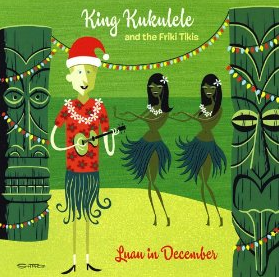
Luau In December, Friki Tiki Records 2008

Audio clip: Adobe Flash Player (version 9 or above) is required to play this audio clip. Download the latest version here. You also need to have JavaScript enabled in your browser.

Hey, you on the right.  Show some class.  I know the hula girls are gorgeous, but come on...

Even if you’ve never heard one of their albums before, chances are that you’re already aware of King Kukulele and the Friki Tikis. Although active for quite some time on the West Coast, King Kukulele officially made his presence known to the rest of the country at the Hukilau in 2002. The following year, his Tiki Palace made quite a splash online and has been hosting the Tiki Tot Tour at Tiki Oasis in recent years. But who are they? The members of King Kukulele and the Friki Tikis consist of:

King Kukulele (Denny Moynahan): Lead vocals and ukelele
Riki Kontiki (Richard Fultineer ): Drum kit, percussion and backup vocals
Malahini Marc (Marc Doten): Double bass, guitarron, glockenspiel and backup vocals
Waikiki Wakefield (Jeremy Wakefield): Lap steel guitar and backup vocals
Bora Bora Bonebrake (DJ Bonebrake): Marimba and vibraphone

Although their self-titled 2004 release was their first CD, 2008′s Luau in December is (as of this writing) their most widely available album. Although the concept may seem kind of odd at first, it actually makes perfect sense. Exotica music takes its listeners on relaxing journeys to faraway places, which is perfect for combating holiday stress and the cold weather blues. In addition to original songs, there are also several exotica versions of Christmas classics. From what I can tell, this album seems to be the first exotica Christmas album of the modern era!

“Luau In December” tells us to trade our eggnog for Mai Tais in this lively, but somehow mellow, tune. King Kukulele’s pleasant voice is well-teamed with the marimba, percussion and steel guitar percussion. A child singing about a greedy young boy’s Christmas expectations in “Brand New Ukulele,” but Kukulele takes over to tell us of the one special gift that changed the lad’s attitude as the extremely catchy backing music picks up. I’m not kidding about it being catchy, either. I can practically guarantee that you’ll catch yourself singing this for days after hearing it. “Santa’s Menehune” deals with a legendary Hawaiian creature that is claimed to have amazing building skills. Naturally, this comes into play when he goes to visit his elven cousin at the North Pole. It’s a cute song thanks to its Chimpmunk-style voices and amusing appearance by “Elf-vis.” The late, great “Duke of Uke” himself, Bill “Tappy” Tapia takes over the singing and ukelele duties for “Tappy Claus.” Backed by a steel guitar, Tappy denies being Santa Claus and recounts his constant bad luck with gifts over the years. It’s a real treat to hear the legend in action and although the song’s reference to over 100 years of bad gifts might seem like a joke, he actually had reached that age at the time the song was recorded! In “Christmas Luau,” the ukelele and steel guitar nicely back this musical tale of a Hawaiian Christmas (which also foreshadows the next track). Those learning about various Hawaiian terms will find this song especially invaluable in their studies. Just don’t listen to it while you’re hungry. Trust me on this.

“The Night Before Christmas” combines sleigh bells and vibraphone work as special guest Laura Thatcher joins King Kukulele in singing this holiday classic while the heavy introduction of “You’re a Mean One, Mr. Grinch” leads to the marimba getting quite a workout with some great ukelele and steel guitar work. “I Work for Santa Claus” has a surprisingly Latin-esque feel thanks to its use of a guitarrón. In it, an elf sings about his job duties and the incredibly chain of mishaps that occurred the night Blitzen lost one of his hors…er…reindeer shoes. There’s also a very welcome reference to the Krampus. What’s not to love? While many traditional exotica songs combine music and animal noises, “Santa’s Workshop” couples vibes and percussion with the sounds of toys being made. This gives the song about toy building an appropriately soft and magic feel. The Friki Tikis’ take on the Yule standard “Rudolph the Red Nosed Reindeer” features incredible drum work here, along with a wonderful instrumental interlude with a steel guitar and marimba. “Reindeer Holiday” is a charming ukelele tune about Santa’s reindeer and their unscheduled Hawaiian vacation, which has a closing vocal harmony segment that is not to be missed. The Tiki rock take on “Hooray for Santa Claus” is simply amazing and is easily one of my most favorite tracks from the album. If you’ve ever cringed whenever the original version of this song played in Santa Claus Conquers the Martians, you need to hear this version. Yesterday. “Thirty-Two Feet and Eight Little Tails” is a peppy musical tribute to the eight tiny reindeer pulling ol’ St. Nick’s sleigh, complete with a great vibraphone lead out. “Mele Kalikimaka” is Hawaiian for “Merry Christmas.” It’s also the name of the album’s final track, which is both faithful to the original version while providing enough of its own distinctive touches to make it feel like more than “just a cover.” Like any good holiday special, this track features plenty of guest performers. Joe Moe (who previously appeared on the album as the lead vocals for “Christmas Luau”) provides the harmony vocals while Ali Lexa handles the lead ukelele duties.

Luau In December will be enjoyed by people of all ages (especially fans of SpongeBob SquarePants) and is a highly recommended purchase. It’s also proof positive how something that’s “family friendly” doesn’t necessarily have be sappy or talk down to its listeners. I, for one, am eagerly awaiting what King Kukulele and the Friki Tikis have to bring us in the future. If it’s anything like this album, then we’re all in for a real treat.

Special thanks to Friki Tiki Records for the review copy!

08/31/12

Freaky Tiki Surf-ari: Clouseaux

Clouseaux

Official Site

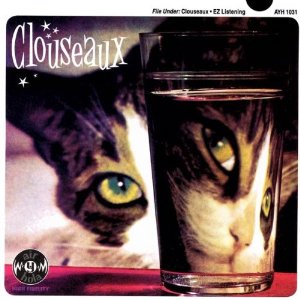
Clouseaux, Air Y Hola 2001
Destination Oasis, Air Y Hola Records 2003
Lagoon, Dionysus Records 2004
Beyond Good and Evil, Self-released 2006

Audio clip: Adobe Flash Player (version 9 or above) is required to play this audio clip. Download the latest version here. You also need to have JavaScript enabled in your browser.


A sneak peek at the newest internet meme

When one thinks of exotica, visions of Polynesia and Hawaii immediately spring to mind. However, exotica groups can be found all over America (and the world). Houston, Texas might seem like the furthest thing from a locale that inspires music to make you think of a tropical South Seas paradise, but it actually makes perfect sense once you realize it’s the home base of Clouseaux. Although widely known as a neo-exotica band, that’s only one facet of their musical identity. Founded by Jay Brooks and David Cummings in 1999, Clouseaux’s sound has been described as everything from “jazzed-up jazz punctuated with mystery” and “the sound track from a James Bond-swanky-spy film that takes ghost train like turns down classic horror movie and 1950′s science-fiction film tunnels and back out again onto beautiful tropical beachs at sunset.” On top of that, the performers in the group are just as varied as the types of instruments used over the course of several albums . According to Facebook, the group’s current lineup consists of:

Jay Brooks: Bass
Kelly Doyle: Guitar
Tomas Escalante: Vocals
Andy Salmon: Drums & percussion
Steve Ruth: Trumpet
Aaron Koerner: Flugelhorn
Alfred Tam: Trombone
Lou Bo: Percussion
John Best: Vibes

The first track of their first album, “Krakatoa,” effectively creates a sense of mystery, which is aided by the use of female vocals. The use of a guitar, drums and horn in “Where Are We Now?” gives it both a semi-surf and spy-fi lite feel, which later takes on a Spanish tone. “Le Nuit” features a lot of jaunty piano work and singing (along with a nifty sample touting a “stereophonic sound spectacular”) while “Payaso” shows how this is the furthest thing from a standard exotica album through its tango-esque and various instrumental touches. The slow-paced “Reum With A View” offers a mysterious feel that makes it perfect old school spy music. “Ennui” starts with the same talking effect that closed out the prior track, which more talking leads to traditional exotica-style performance. Piano work and trumpet work abounds, and there’s even a mild sense of menace at one point. “A Most Excellent Flying Death” is a fast paced surf-style track with great organ work and reverb, while “Fist On The Green” is easily the catchiest financial argument you’ll ever hear. Fans of the podcast should be familiar with “Jack The Ripper,” which makes great use of drums and reverb for a creepy stalking effect. “Marauder” is a a bit moody and sounds like it came straight from the nightclub of my dreams. There’s plenty of trumpets and bass, along with amazing guitar work. There are also points where it gets Brian Setzer or ska-like at times, so this track is a great way to introduce fans of that kind of music to the world of Clouseaux.

No joke here, just an awesome Tiki.

Next is the 2003 EP Destination: Oasis, which was first released at the third Tiki Oasis. Said EP has “Krakatoa” and “Reum With A View” from their first album, in addition to “Shrunken Heads,” “Copper Locked Nymph” and “Destination: Oasis” from the (then) upcoming album Lagoon! There’s also an exclusive track called “Chic Alors!” Said track features peppy maracas, bongos and light music. Although it has a Spanish feel, it has French dialogue. It’s odd, but I like it!

100% Gill-Man free!

Lagoon! came out the following year and if Clouseaux demonstrated all of their preferred styles, then this album focuses more on their exotica influences (specifically neo-exotica). “Lost Lagoon (Intro)” sets the stage perfectly with animal calls and a laid back beat. But thanks to the sneaky vibes, there’s also a hint of darkness. Thanks to its speedy bongos and chanting, “Shrunken Heads,” has a definite tribal feel. I also love the spooky, surfish guitar work. Speaking of surf, the opening of “Destination: Oasis” has a classic surf feel that leads into a great percussive beat and chanting. There’s also a classic exotica feel follows the Spanish-esque guitars and trumpets. “Walking From Juarez” offers a sneaky spy groove with occasional spooky touches and Spanish(?) singing, while the energetic “The Dance Of The Crustraceans” offers bouncy and speedy percussion that sounds like scuttling crabs. “The Kiss Of Ku” has a low, spooky build that gradually rises with backing percussion that later gives way to a catchy Spanish guitar beat and other light touches. This album’s version of “Krakatoa” is definitely different take on the track heard in their debut album. “Copper Locked Nymph” desperately needs to be in an old school, larger than life James Bond epic, especially due to the big second half. This time around, “A Most Excellent Flying Death” has a fast paced, surf-style opening with mild percussion and horns. While the original used the sounds of a car chase (and crash), this take focuses purely on the music. If you want to introduce a ska fan to Clouseaux, make sure to play this track for them. This version of “Reum With A View” is longer than the original and although it retains the soft, nightclub-style opening, there’s also fantastic solo and sax work along with a sneaky/dark undercurrent. In “Noctopia,” exotica takes center stage in this tiki/surf mix, with plenty of cymbals and other examples of exotic instrumentation. Finally, “Lost Lagoon (Reprise)” is a shorter, more subdued take on the first track.

I knew him well fellatio...I MEAN HORATIO!  Sorry, I got distracted...

In addition to its many guest performers (Jerry Sanchez, Daniela Freidl, Will Crux and Paul Peacock), Beyond Good and Evil also features a ton of samples from vintage ads, Diamonds Are Forever and the Vincent Price classic The Pit and the Pendulum. Thanks to its “climbing” piano work and futuristic conga/surf fusion “The Kitchen of Tomorrow” has a very 50′s cartoon-style feel. “Hunt of the Savage” effectively uses fast bongos and surf guitar work with vocals and a Spanish trumpet while the surf stylings of “Genie vs. Genie” are somewhat slower and the Spanish feel is gradually introduced here. “The Awful Green Things From Outer Space,” inspired by the board game of the same name, features plenty of reverb-heavy guitars and electro-spacey sounds that provide a sense of menace and something approaching. “Paraiso” offers a slow neo-exotica feel with its slow drums, animal calls, vibes and
steel guitar work while”The Monkey With The Golden Fez” is a more frenzied track full of bongos and surf guitar work (along with plenty of screeching monkeys). “Exhuming Elizabeth” features a creepy surf guitar and drums and “Tango de los Muertos” lives up to its name with its sinister tango feel. “Magic” utilizes soft, dreamy vocals and great guitar work for a Hawaiian feel, which can also be felt in the Spongebob Squarepants-esque reverb work in “The Girl From Atlantis.” The vibraphone is easily the star of “Beyond Good and Evil” and is nicely complimented by the bongos and guitars. Soft, sad piano work starts off “Catalonia,” but the mood improves as string work enters the picture. Everything about “Jungle Witch” is amazing, from its creepy, guitar-based introduction to the amazing saxophone work (along with the use of mystical-sounding chimes). For the grand finale, “The Toy Store of Tomorrow” offers a Spanish flavored sense of running around, along with trumpets, laughs and a slide whistle!

If their first two major albums focused on a general introduction to their varied styles and exotica respectively, Beyond Good and Evil focuses on their unique guitar stylings. No matter which one you pick up, you’re sure to have a great listening experience. Although their last CD release was in 2006, Clouseaux is anything but inactive. In fact, they have three limited edition vinyl 45s coming out this year. They also have a more overtly horror-related side project, but that’s another story for another time…

Special thanks to Clouseaux for the review copies!

08/21/12

Freaky Tiki Surf-ari: Mr. Ho’s Orchestrotica

Mr. Ho’s Orchestrotica

Official Site
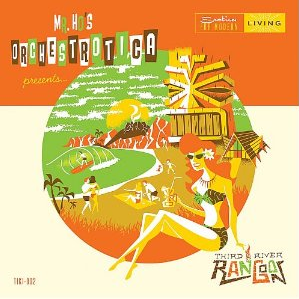
Third River Rangoon, Self-released 2011

Audio clip: Adobe Flash Player (version 9 or above) is required to play this audio clip. Download the latest version here. You also need to have JavaScript enabled in your browser.

>

There sure are a lot of gingers here...

One cannot discuss Mr. Ho’s Orchestrotica without first discussing Juan García Esquivel. More popularly known as “Esquivel” or “The King of Space Age Pop,” he got his start piano playing for a Mexican radio station when he was only eleven years old! Six years later, he was a popular bandleader in charge of a large orchestra. It wasn’t long before an American record label took notice of this and worked out a deal with him. The timing could not have been more perfect, as stereo recordings had just started to become widely available to consumers. Esquivel took advantage of the format to spectacular effect, especially given his use of big band sound and exotic instrumentation. Although (understandably) known as “The King of Space Age Pop,” he also drew upon Mexican and Latin influences in his music. Esquivel believed that one has to grab the audience’s attention in order to charm him, which meant that he had to seek out a variety of interesting sounds. He likened his work to an artist painting, with music being like his paint.

Although he passed away in 2002, Esquivel’s music still lives on. In addition to the numerous rereleases of his work on CD, he also inspired one Brian O’Neil. Regular readers of the site should recognize him as the original vibraphonist from Waitiki. Mr. Ho’s Orchestrotica is dedicated to keeping Esquivel’s legacy alive by both performing his works and creating original music inspired by him (among other influences). The former is no easy task, given that no written compositions of Esquivel’s are currently known to exist! Although the core membership of the group is four people, they also work with 22 other musicians in order to properly showcase the big band sound of Esquivel’s work. Said core membership consists of:

Brian O’Neil: Vibraphone, pandeiro, bodhran, tammorra, tappan and bird calls
Noriko Terada: Live percussion, marimba (Track #11) and vibes (Track #6)
Geni Skendo: Bass flute and C-flute
Jason Davis: Acoustic bass

The subject of today’s review, Third River Rangoon, was released a year after their debut album, The Unforgettable Sounds of Esquivel in 2010.

According to the liner notes for the subject of today’s review, O’Neil was not a big fan of traditional exotica when he first heard it, but came to love how it lets one “escape” and experience exotic locales. Mr. Ho’s Orchestrotica offers its own unique brand of “third-stream exotica,” which keeps the escapism while also allowing them to seek out musical influences that are different from that of traditional exotica.

The opening track, “Third River Rangoon” uses an incredible array of instruments to create a very soothing, laid back feel with a hint of mystery. The vibe and flute work really shine here. “Thor’s Arrival” plays tribute to Thor Heyerdahl’s famed Kon Tiki expedition by musically conveying both the experience of an explorer arriving in mysterious land and a sense of exploration. As the vibes and percussion blend with bird calls, a mix of both leisure and majesty is also felt. In this strange land, wonders (and not horrors) await. Next is an amazing take on Milt Raskin’s “Maika,” whose flute work, soft chimes and other percussion make for a very relaxing experience. The Orchestrotica’s take on Cal Tjader’s “Colorado Waltz” shakes you out of slumber without being too jarring thanks to its medium pace and amazing vibe work. Their take on Tchaikovsky’s “Arab Dance” brought back many memories of The Nutcracker. It’s a slow, exotic (but faithful) take on classic where both the flute and exotic string work excel. It’s the perfect way to spice up the playlist at your next Christmas party. “Phoenix, Goodbye” features both an unusual instrument in its introduction and equally unusual percussion throughout the rest of the track. It’s unlike anything I’ve ever encountered, and I mean that in a good way.

“Terre Exotique” uses exotic percussion coupled with great string work and vibes to great effect, while “Autumn Digging Dance” features Tev Stevig on the oud. The oud, along with the occasional chimes and cymbals add to its Middle Eastern feel. Listeners of our podcast should recognize “Moai Thief” and its sense of magic and mystery. Its musical variations convey sneaking, while the drums make one think of islanders. Sharp-eared listeners will also note a Dmitri Shostakovich influence. Living in Massachusetts, I have a very special fondness for “Lonesome Aku of Alewife.” Remember back when I commented on how the Ding Dong Devils song “Ballad of a Taboo Image” reminded me of a local event. Well, what I (and this track) are referring to is the closing of the beloved Polynesian restaurant “Aku Aku” in Alewife. I cannot tell you how many times I passed by its rotating sign featuring Moai artwork during my travels through the area over the years. I, like so many others, were distraught upon the news of Aku Aku’s closure. Adding to the distress was the fact that not only were the twin moais at the entrance local icons, but they had been previously rescued from the closing of the Polynesian Village restaurant in Boston! When Jasper White’s Summer Shack moved in, they kept one of the moais and repainted and reworked it into a giant fisherman. The Summer Shack also kept the Buddha statue by the entrance and still has the scorpion bowl on their menu (whose entry mentions Aku Aku by name). In the track itself, the bass and percussion work well with the guiros and vibes, which later transitions to an amazing bass solo. Things close out with “Lyman ’59,” which perfectly captures the essence of Arthur Lyman’s work (especially his work on the Bwana á and Bahia albums. Vibes carry us through a musical journey with dreamy flute work, magical chimes and soft animal calls in distance. In short, a great ending to a great album.

As a special bonus, look for the essay by Brother Cleve (of Combustible Edison fame) hidden under the CD. Speaking of bonuses, you can download the above streaming track (along with some other selections from the album) by clicking here. Enjoy!

Special thanks to Mr. Ho’s Orchestrotica for the review copy!

08/8/12

Freaky Tiki Surf-ari: The Return

We're baaaack!

The Freaky Tiki Surf-ari is back and I’m really excited about this year’s schedule of events. We’ve got two exotica reviews, two surf rock reviews, a tie-in episode of the podcast and more! On top of that, each music review will have a bonus sample track! I’m also looking forward to showcasing my new, stripped-down take on music reviews. If you go back to my earliest music reviews, it’s painfully obvious that I had no real idea of how to do a music review and tried to fake my way through it by describing as much about the music as possible. While this has its advantages for Music to Haunt By, it’s just a burden to read for everything else. Using my new take on reviewing may take me a little longer to get the review out, but I think the end result will be worth it.

Another reason for my excitement is that I’ve recently solved a mystery that’s been vexing me for quite some time. Back when I was writing the introductory entry for the first Freaky Tiki Surf-ari, I had wanted to note an example of how a jungle exotica album used artwork from a horror movie poster in order to both show the horror/Tiki connection and show that exotica extended beyond its Polynesian origins. However, I had to leave it out due to me being unable to identify the horror movie in question. Thankfully, idly searching for DVDs on Amazon led to me finding the movie in question. Granted, I’m not sure if the tracks from the album in question are truly exotica, but jungle exotica definitely does exist. In fact, I was quite pleasantly surprised to find that some of the exotica tracks I’m reviewing this year contain a mix of both traditional exotica and exotica influenced by other locales (as I had originally intended to discuss using the above example).

Oh, and that’s not the only new connection between exotica and horror that I picked up on this year. Remember how I said the opening of “Bali Ha’i” from South Pacific sounded like something out of a science fiction movie? Well, it turns out my offhand comment for more accurate than I had anticipated, as some horror fans have noted how the first few notes of it sounds very close to the “Bride’s Theme” from Bride of Frankenstein. Freaky Tiki indeed!

To tide you over until the first review, here’s a look back at last year’s Freaky Tiki Surf-ari:

Freaky Tiki Surf-ari: The Return
Freaky Tiki Surf-ari: Go!Tsunami
Freaky Tiki Surf-ari: Ding Dong Devils
Freaky Tiki Surf-ari: 6′+ Episode 11 is Up!
Freaky Tiki Surf-ari: More Arts & Crafts

Freaky Tiki Surf-ari: The Crimson Ghosts
Freaky Tiki Surf-ari: King Kong vs. Godzilla Soundtrack

08/31/11

Freaky Tiki Surf-ari: King Kong vs. Godzilla Soundtrack

Akira Ikufube

Official Site (Label)

King Kong vs. Godzilla Soundtrack, La-La Land Records 2006 (Original release date: 1962)

Yeah, like we'd be dumb enough to try using a picture of Godzilla without Toho's expressed written consent.

I know this seems like a bizarre way to close out this year’s Freaky Tiki Surf-ari. Truth be told, even I thought the idea that the King Kong vs. Godzilla soundtrack had anything to do with exotica music seemed odd at first. But as strange as it seemed, seeing the phrase “It’s Cocktail Hour at the Godzilla Tiki Bar” at the Amazon listing for the CD definitely caught my interest. Being a big Godzilla fan, I ordered the CD in order to experience it for myself.

I think part of the reason people might find the idea so surprising is due to their only being exposed to the American version of the film. What was originally a humorous commentary on commercialism in Japan was reedited into a serious science fiction movie. One of the casualties was the vast majority of the film’s score, which was replaced with stock music from a variety of Universal films. According to this, these films include Creature from the Black Lagoon, Bend of the River, Untamed Frontier, The Golden Horde, Frankenstein Meets the Wolfman, Man Made Monster and The Monster That Challenged the World. It wasn’t until La-La Land Records issued this CD in 2006 that the original soundtrack had an official release in America. Rather than discuss things like how the film originally started development as “King Kong vs. Frankenstein” or the how Godzilla really doesn’t win in the Japanese version, I’d rather discuss the composer for awhile before reviewing the album itself. Oh, and since this is a soundtrack review, please be warned that the names of the tracks may contain spoilers for the events depicted in the film.

Back when the classic Godzilla films were first hitting American screens, Akira Ifukube was one of the few (if not the only one) people involved in the making of Godzilla movies whose name could be found in American reference books. Ifukube’s love of music began in his youth and he even practiced composing in his spare time after his university studies. He obtained his first taste of international recognition in 1935 for his winning of the Tcherepnin Prize with his composition “Japanese Rhapsody.” His first film score came in 1947, when he composed the score for the movie The End of the Silver Mountains. Many more film scores would follow, including numerous daikaiju films for Toho. In fact, Ifukube was responsible for creating Godzilla’s famous roar and footstep sound effects! Although he is sadly no longer with us (he passed away in 2006 from multiple organ dysfunction syndrome), his music and legacy live on.

Powerful music and native chanting make up the “Main Title” while “Series of World Wonders” is an extremely brief vibraphone-style opening theme. Those who have seen the American version of the film might remember a shot of a less than realistic model of the planet Earth floating in space. In the original Japanese version, this was part of a gag involving the opening of the above-mentioned fictional television series. However, the footage revealing the joke was removed from the US cut of the film and led to many reviewers citing the scene as an example of “cheesy special effects.” In the first of many combo tracks, “The Sparkling Iceberg/Pashin Commercial” starts off very soft (with a touch of creepiness) and builds up, while cymbals and percussion lead to the commercial tune. The Lymanesque “Fujita & Fumiko” is a fantastic jazzy piano tune with soft saxophone work and what seems to be a touch of vibe work. “The Seahawk in Crisis/Great News Gathering Team Departure” starts with a buildup of suspenseful music with touches of the classic Godzilla theme while bass drums give a sense of power. This contrasts with the next song’s cheerful tuba march music. “The Seahawk’s S.O.S.” is appropriately dark and mournful, with eerie touches that would fit in well inside The Twilight Zone. In the quick “Faro Island,” drums and soft wind instruments convey a tropical feel. In the similarly quick “The Natives” features a soft, slow build up on the gong and chorus of native voices. “Southern Island Tale” is a jaunty, jazzy tune with pianos and playful female Japanese vocals.

“Thunder and the Devil/Fumiko’s Misgivings” opens with pounding and chanting that is similar to (but distinctly different from) the opening track. However, things slow down and soft drums take over for the Fumiko part. “Godzilla’s Resurrection” is pure power and terror in audio form. In other words, it’s the Godzilla theme that all G-fans know and love. “The Cry of the Devil/A Prayer to the Rolling Thunder” opens with soft (but stern) drums and the occasional use of horns. Both parts blend very well into each other. In “The Devil of the South Seas/Drums of Battle/Giant Octopus vs. King Kong,” things pick up in terms of both volume and feel, as terror and unease enter the picture. Native drums quickly build up and vanish as we enter next portion. It may surprise some to learn that the octopus was realized through a combination of puppetry, stop motion animation and use of live octopuses on miniature sets. In fact, one of them wound up as special effects director Eiji Tsuburaya’s dinner! In “The Sleeping Devil,” soft drums and familiar chanting are used to lull the giant ape to sleep. In “The Terror of Godzilla,” the classic Godzilla theme returns and in “The Invincible King Kong/Preparation for Operation ‘Burial,’” more unease and a sense of regality are heard. “King Kong vs. Godzilla I” has a soft opening buildup which quickly builds in both power and intensity. There are also echoes of the native chanting in terms of overall feel and not actual usage of said chanting. It’s hard to explain, but you’ll know what I mean when you hear it. “Preparations for Operation ‘One Million Volts’” is serious and militaristic while “Operation ‘Burial’” is suspenseful and owes much to the Godzilla theme, as does “Operation “Burial” Fails” and “Operation “One Million Volts” I.” In sharp contrast, “Operation “One Million Volts” II” features soft drums and more of the unease/King Kong feel. “Kong Shows Up in Tokyo” builds upon the themes set by last track and also incorporates vibe-like touches. While “The Plan to Rescue Fumiko I” features drums and soft native chanting, “The Plan to Rescue Fumiko II” use of chanting and drums is more energetic and even a touch militaristic. The busy “The Plan to Transport King Kong” coveys a military-style sense of purpose and action thanks to its use of drums and horns. The creepy opening drums of “King Kong Advances on Fuji” creates the sense of a gigantic monster approaching. “The Confrontation at Fuji” offers a fusion of styles: native chanting playing under a military march/Godzilla theme variation. Similarly, “King Kong’s Resurrection” combines Toho’s King Kong theme and native drums. “King Kong vs. Godzilla II” is frantic and fast-paced battle theme while “Ending” has a soft opening that builds up to big farewell. In the first of two bonus tracks, “Main Title (mono)” provides exactly what the name implies. “Main Title (a cappella)” is a drum-free version of opening. I should stress that this is an all new version of the opening theme and is not just the opening with instruments stripped out. It’s fascinating to hear only native chanting without any backing instruments, along with the new touches which seem to have been thrown in.

Although not of the all is exotica-related, there is enough of it to interest fans of the genre. If you’re looking for a present for the Tiki fan who has everything, this is the perfect choice. Japanese monster movie fans will appreciate the detailed liner notes by David Hirsch, which cover both the making of the film and provides details about each track on the album. Even if you are not an exotica fan, this is an amazing album that demonstrates how Akira Ikufube is a true master of his craft. Just be sure not to dawdle, because it’s now out of print and the price is rising fast!

08/19/11

Freaky Tiki Surf-ari: 6′+ Episode 11 is Up!

It's one loco luau!

To quote the description given at the new listing:

“It wouldn’t be summer without the annual event over at Gravedigger’s Local 16: The Freaky Tiki Surf-ari. You can check out all the hooplah at the luau here while you listen to this episode. We have some of the hits from Tiki’s past, present and future.

Mix up your favorite fruity concoction, put on that Hawaiian shirt your family begs you to throw out and kick you feet up as you listen to music from The Ding Dong Devils, Don Tiki (and DJ Jimmy B), Clouseaux, The Moon-Rays, Satan’s Pilgrims and more!”

You can find all episodes of 6′+ over at the official site as well as on iTunes. We’re also on Facebook and Twitter.

08/18/11

Freaky Tiki Surf-ari: Ding Dong Devils

Ding Dong Devils

Official Myspace

Tassels, Mai-Tais & Mischief, Tiki Tunes Records 2010

Nice...artwork,

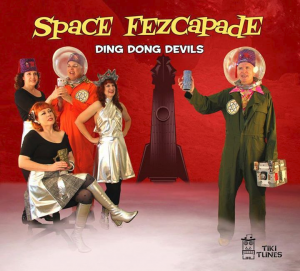
Based out of Los Angeles, the Ding Dong Devils are not your average exotica band. In addition to the obvious exotica and surf influences, the band also draws inspiration from “fuzzy 60’s garage rock, amped-up rockabilly, tremolo-laden surf, and even the greasy bump and grind music that was used to accompany burlesque performers.” Their seamless changing from style to style in each song seem just as playful as the band itself. Speaking of which, the Ding Dong Devils feature:

Edwin Letcher as Rama Lama – vocals, guitar, ukelele and xylophone
Julia Devine as Nepheria – vocals, bass and upright bass
Brent Walker as Caltiki – vocals, guitar, steel guitar and mandolin
Rosann Simeroth as Puka von Pule – vocals, drums and percussion

While Tassels, Mai-Tais & Mischief is their debut album, that’s not the only reason why it’s special. Guest musician Dave Klein was brought in to lend his expertise on keyboards, bongos and percussion while noted artist (and Tiki mug maestro) Derek Yaniger was tapped to provide the cover art. But what of the music itself? Let’s find out!

Things kick off with the jaunty steel guitar and bongos of “Ding Dong Devils Theme I.” It’s a short, humorous piece used to start up their shows. “Jungle Doctor” has a heavier sound with plenty of rockin’ guitars. Despite what the title might have you think, the song’s subject matter is not a witch doctor. Instead, it’s who you see out if you had two many Mai Tais or headhunters have you in a stew. I enjoyed the punchline at the end. “Rob Roy” opens with the sounds of bar chatter and we soon hear a man trying (but failing) to get the bartender to make the titular drink. The overall feel of the song is that you’re overhearing conversations in a bar as a band plays in the background. In “Ballad of a Taboo Image,” a wooden idol sings of being transplanted from an island tribe to Polynesian restaurant. As the catchy tune continues, we hear of the further trials and tribulations of the transplanted Tiki. If it wasn’t for the ending, I would swear this song was based on the story of a Tiki restaurant turned seafood joint in my neck of the woods. The instrumental (save for the spoken refrain) “Tassel Hassle” wonderfully uses a steel guitar to musically conjure up exactly the sort of thing the title implies. Although the name “Theme from ‘Belly Dancers of Bali Bali’” might make you think of a movie theme, this is a completely original composition by the band. That said, it would definitely make a great introduction to a film, as drums start things off and soon give way to both a reverbtastic steel guitar and a wild chant of the title by the band members.

The percussion and keyboards evoke a spooky feel in “Leopard Man,” as do varying vocals which describe the villainous subject of the song. In fact, the whole band gets in on the action when it comes to warning us of the Leopard Man, who seems more like a super villain than a member of the Leopard Society to me. “Sufferin’ Bastard,” a tribute to (and history of) the drink of the same name, has a rock feel. If you thought mummies would get a mention due to the drink’s origins in Cairo, you’re right! Soft percussion, guiros and a steel guitar set the mood for “Mai Tais in the Moonlight,” where a couple sing of a tasty Polynesian picnic in the moonlight, along with how each drink effects the woman. “I Carry a Tiki Torch,” in which a lovestruck singer demonstrates how not to pick up someone you fancy at a bar (Tiki or otherwise), has the feel of a subdued B-52′s song with a tropical touch. In sharp contrast, “Head Shrinker” is much darker, (well, as dark as the Devils can get) where drums and chanting back several people commenting on a shrunken head. I never thought roast pork would make a good multi-faceted metaphor for love, but the fast, rockabilly tune that is “(You Got Me) Stuck like a Luau Pig” showed me otherwise. Guiros (an exotica standard) make an appearance in “Tiki Boots” among the soft ‘n slow percussion and guitar work. The closing of Tiki bars and their subsequent replacement with more “mainstream” establishments is all too common these days. “False Idols Put a Curse on You” uses organ work, percussion and guitars to weave a tale of the terrible fate suffered by those who try to just that, something I imagine many a Tiki enthusiast secretly wishes for in their darkest moments. “Brontosaurus Stomp” is an excellent cover of the Piltdown Men’s classic ditty, in which drums filling in for the footfalls of a dancing dinosaur. Finally, “Ding Dong Devils Theme II” closes out the album (and this review) out with a continuation of the opening track.

My advice to hardcore Tiki enthusiasts is to think of the group as the musical equivalent of American-made “Polynesian” creations like crab rangoons and rumaki: not technically exotica in the strictest sense, but is still inspired by it (and still wonderful). Unlike the subject of my previous installment in the Freaky Tiki Surf-ari, Tassels, Mai-Tais & Mischief is a factory-pressed CD release. They “put the hula in your hula hoop” and “strum ukeleles until their fingers hurt”…they’re the Ding Dong Devils!

Special thanks to the Ding Dong Devils for the review copy!

09/29/10

Freaky Tiki Surf-ari: Don Tiki

Don Tiki

Official Site

South of the Boudoir, Taboo Records 2009

You don't have to turn off the red light...

I first became hooked on Don Tiki after hearing the spooky Tiki track “The Natives Are Restless.” Further research on the band led me to discover that they had done other songs with kinda creepy titles, such as “Axolotl” and “The Hypnotizing Man.” Their debut album, The Forbidden Sounds of Don Tiki also depicts creepy idols, green fire and a human skull (carrying over aspects from the cover of The Exotic Moods of Les Baxter). Not that it effects my enjoyment of the band, mind you. Don Tiki could have never done any of those things and I’d still love ‘em.

The booking agent for Don Tiki had an interesting observation about Ritual of the Savage, the same album whose cover art inspired the creation of the Freaky Tiki Surf-ari. He said that the spooky idol images were “…meant to stir passions within the safety of suburbia,” or as the band likes to say, “where sensual fantasies exist…especially after that third mai tai.”

Sex is an aspect of Tiki culture (that link is NSFW, by the way), although said aspect is often toned down in general pop culture. Don Tiki has embraced this aspect of Tiki, as evidenced by this album’s title and Skinny Dip With Don Tiki. Speaking of the album, they’ve really gone all out and have assembled quite a selection of talent. In addition to the core members:

Jim Howard: Flute
Sharene Lum: Harp
Hai Jung: Lead & backing vocals
Sherry Shaoling: Lead & backing vocals
Delmar deWilde: Lead & backing vocals
Carlinhos de Oliveira: Brazilian percussion
Perry Coma: Keyboards percussion & backing vocals
Noel Okimoto: Vibes, marimba, drums & percussion

They also brought in:

Ryoko Oka: T’rung
Dean Taba: Basses
Jason Segler: Drums
James Ganeko: Congas
Starr Kalahiki: Backing vocals
Rockford Holmes: Saxes & flutes
Yo Ma-Ma (Jimmy Borges): Lead vocal
Lopaka Colon: Jungle percussion (of The Waitiki 7 fame)

Continue reading

09/28/10

Freaky Tiki Surf-ari: Robert Drasnin

Robert Drasnin

Official Site

Voodoo II, Dionysus Records 2007

That voodoo that he do so well...

Martin Denny. Les Baxter. Arthur Lyman. They are the greats of the classic exotica world. However, I think there’s a name missing from that list: Robert Drasnin.

Granted, he’s only released two exotica albums, Voodoo and Voodoo II, but I think their quality and importance more than makes up for the lack of quantity.

The Voodoo series actually has an interesting history. Back in 1959, Drasnin composed Voodoo for Tops/Mayfair Records. Tops re-released it a year later with new cover art and under a new title: “Percussion Exotique.” It wasn’t until 1996 that it was reissued onto CD by Dionysus Records. That same year, Pickwick Records (then owned by the now-defunct video company Simitar) released a CD called Exotic Excursion which was made up of 10 of the original album’s 12 tracks. However, while the Dionysus release was mastered from a previously unplayed record, the Pickwick release used the original master tapes from the 50′s. Why two different companies released CDs of the same material using different masters (and why the one using the master tapes didn’t use two tracks) is a mystery to me.

After the original release of Voodoo, Drasnin performed as a musician in numerous other albums, did work on television shows like Lost in Space and The Man From U.N.C.L.E. He even became CBS’ Director of Music in 1977! According to the liner notes, the idea to create a sequel to his hit exotica album came in 2005, after the tremendous response to his live performance of selections from Voodoo at the Hukilau Tiki festival. Two years later, Voodoo II was released.

Not only did Mr. Drasnin compose, conduct and arrange the entire album, but he also played the clarinet, flute and saxophone! One top of that, he recruited:

Mike Lang: Piano
Jim Hughart: Bass
Billy Hulting: Vibes
Amy Shulman: Harp
Peggy Baldwin: Cello
Howard Greene: Drums
John Sawoski: Keyboard
DJ Bonebrake: Marimba
Stephanie Bennett: Vocals
Bobby Shulgold: Alto flute, flute
Brad Dutz and Scott Breadman: Latin percussion

As you can see, this was a true labor of love and not a quickly slapped together cash in. In fact, the resulting sound is so rich (thanks to the use of so many instruments) that my write-up can’t cover them all!

Continue reading

09/21/10

Freaky Tiki Surf-ari: Stereophonic Space Sound Unlimited

Stereophonic Space Sound Unlimited

Official Site (Label)

The Spooky Sound Sessions, Dionysus Records 2009

There's always room for giallo!

After Kava Kon, we have one more stop in our Freaky Tiki Surf-ari side trip through the world of neo-exotica, which also takes us further into the world of space age pop.

Stereophonic Space Sound Unlimited is something of a mystery to me. They don’t have any official website or social networking pages that I can find and what few tidbits of information about them I managed to find online are very brief. Their Wikipedia entry refers to them as a “Swiss instrumental band” that’s been releasing albums since the late 90′s, along with references to some projects that have used the band’s music on their soundtracks. This calls them a “Swiss instrumental/exotica/space age duo,” which makes the mention of a third musician on the CD’s back cover a bit confusing. Are they a new member or a special guest? I honestly can’t say that I know. All I do know is that these people are credited are:

Karen Simpson: Guitar and percussion.
Markus Maggiori: Bongos, congas, and percussion.
Natz Maeschi: Guitar, bass, organ and keyboards (He also wrote the music).

Reading the CD also resulted in my realizing that the album’s title was due to the music being recorded at the “Spooky Sound Studio.” This initially did have me worried that this wouldn’t be a good fit for Freaky Tiki Surf-ari but as soon as I played the first track, I knew everything was going to be all right…

Continue reading

08/30/10

Freaky Tiki Surf-ari: Chaino

Chaino

Official Site (Label)

Eye of the Spectre, Dionysus Records 2008 (Original release date: 1957)

*glass drop*

One of the most striking things about this CD is the cover, the artwork on which looks like something from a horror comic by Eerie Publications. It features an African tribesman strangling and preparing to whip a native woman in practically see-through clothing, who is in turn struggling to reach a dagger. Pretty bold stuff for a 1957 release and it is nothing short of amazing that Dionysus Records (under their Bacchus Archives imprint) was willing to use it in our modern times.

But don’t let your feelings about the cover affect your opinion of the artist or the music. If anything, let it provoke your curiosity…who or what is Chaino? According to the liner notes, producer Kirby Allan had recorded the sounds of tribal wedding ceremonies in Africa and attempted to build interest in his “new sound.” After receiving numerous complaints that the music was too repetitive, Allan decided to rework the music a bit to make it more palatable for American listeners. To this end, he teamed up with a musician whose real name is lost in time and is known only as CHAINO…

Eye of the Spectre is the first of six Chaino albums and its odd name is (according to the back cover) a reference to the “unbridled passion of love’s eerie spectre.” But that, along with the scary Tiki figure art on back cover aren’t Chaino’s only horror connections. The liner notes reveal that Chaino songs were used in low budget chillers like Night Tide and The Devil’s Hand.

Now that I think about it, those films have been released through many “public domain” DVD labels. As Atomic Mystery Monster often points out, even if we assume the films themselves are truly PD, those companies could get sued if the Chaino songs on their soundtracks weren’t created especially for the film as works for hire. If the Chaino material was created before those films, it would copyrighted separately. You see, you have to replace or license music that’s still under copyright even if it appears in a public domain work. That aside, the use of Chaino’s music in those films is still not the final horror connection…

Continue reading

08/27/10

Freaky Tiki Surf-ari: Kava Kon

Kava Kon

Official Site

Departure Exotica, white label detroit 2005
Tiki for the Atomic Age, Dionysus Records 2009

For this installment of the Freaky Tiki Surf-ari, we’ll be taking a side trip into the world of neo-exotica. What is neo-exotica? From what I can tell, neo-exotica is exotica music made using synthesizers and other electronic music equipment in addition to classic exotica instrument standards. It’s a close cousin to another exotica offshoot, space age pop, and the bands that make it tend to have fewer members than old school exotica groups.

Although the term is never used in the following Amazon writeup, I still think it also helps describe how Kava Kon is a neo-exotica band: “Kava Kon is an electronica lounge duo. With heavy influences in exotica, bossa nova, electronic, cocktail lounge, western, and 1950s-60s hollywood sound. They make music for the lounge crowd and all of the Tiki heads.”

According to the band’s Myspace blog, Kava Kon was formed by Nels Truesdell and Bob Kress in 2004 as “a magical escape from the urban decay surrounding them in their former home city of Detroit.” In 2005, they released their first album Departure Exotica and followed it up with Tiki for the Atomic Age in 2009. The cover art for both was done by the talented Heather Watts.

Boy, this sure is a quiet village

Continue reading

07/17/10

Freaky Tiki Surf-ari: The Waitiki 7

The Waitiki 7

Official Site

New Sounds of Exotica, Pass Out Records 2010

Hello, my name is Rapanui and I'll be your server for the evening.

Waitiki is dead, long live The Waitiki 7!

After their 2005 debut album, Waitiki released two more albums, 2007′s Rendezvous in Okonkuluku and 2009′s Magic Island Sounds: The Wedding Album, before departing from this mortal coil (figuratively speaking). However, its mission and spirit lives on in the Waitiki 7. Confused? Perhaps I should let band leader Randy Wong clarify the matter:

“We were asked by the Haus der Kulturen der Welt in Berlin, Germany to assemble an all-star group for their Wassermusik festival that summer, and The Waitiki 7 was born. Second we wanted to expand our scope beyond music, because we were starting to do tiki consulting, mixology (craft cocktails), and other stuff. Lastly, with The WAITIKI 7, we wanted to go after the jazz/world market which meant a more “serious” approach to the music. We need to create a separate identity for that sound because a lot of “serious” music critics etc. would scoff at a band that was as “silly” as our previous quartet work.”

Whereas the original band’s lineup consisted of:

Tim Mayer
Brian O’Neill
Abe Lagrimas Jr.
Randy Wong

The Waitiki 7 consists of:

Tim Mayer
Helen Liu
Zaccai Curtis
Jim Benoit
Abe Lagrimas Jr.
Lopaka Colon
Randy Wong

Despite the sharing of members from Waitiki, this is a new and different band. But although the tone may change, but the music is still great either way. Think of Charred Mammal Flesh as an impromptu jam session among friends at a private barbecue while New Sounds of Exotica is how the same friends (along with a few who missed the party) play for a big club gig.

Continue reading

07/17/10

Freaky Tiki Surf-ari: Waitiki

Waitiki

Official Site

Charred Mammal Flesh, Pass Out Records 2005

Yum!  Oh, and that pig looks pretty tasty too.

In our last exotica installment, I shared a story about the origin of the song “Bwana” (and about the use of animal calls in exotica) that had been told to me by an exotica musician. Since he went unnamed in that in order to help build interest for this particular installment, it’s time to give the man his much-earned credit: Randy Wong, the founder of the band Waitiki (and Waitiki International LLC).

Waitiki was formed in 2005 with the goal of introducing (and reinventing) classic exotica music for the listeners of today. Their debut album, Charred Mammal Flesh (subtitled “Exotic Music for BBQ”) shows the band’s method of going about this: a mixture of covers and original music.

And what exotic music it is! The liner notes instruments including (but not limited to): upright bass, vibraphone, marimba, melodica, and reeds. Given that I have no idea what some of those instruments sound like, some of my music descriptions are based on my best (careful) guesses. But while I don’t always know what I’m hearing, I do know what I like!


The album opens with Waitiki’s take on “Bwana,” which they call “Bwana, Bwana A” here. Not only does its use act as a tribute to Arthur Lyman’s music, but I was also informed that it was also a reference to how Lyman used it to open his shows. After the mysterious-sounding flute introduction, we get the drums and cry of “Bwana.” Due to the band’s numbers being smaller than Lyman’s the returning cry lacks the “oomph” of the original. This has the unintentional effect of making it sound like a tribe in a B movie, where a handful of actors and actresses have to seem like an entire village.

However, this does fit in with the humorous tone of other material on the album and what comes afterward provides a great sense of power. Gone are the happy melodies, native chatter and bird calls of the original. In their place are heavy-sounding, warlike drums. This ties in with the loose storyline connecting the songs that’s given in the CD’s liner notes, where it is explained that a tribe is getting ready for battle.

Also according to the previously mentioned storyline, tribesmen are investigating the “Cave of Uldo” due to the sinister sounds they hear coming from it. Although there are occasional creepy notes at beginning, the rest of “Cave of Uldo” has a somewhat symphonic feel to it and makes great use of a Cajón drum and vibraphone. Next comes Waitiki’s version of “Manila,” Martin Denny’s tribute to the capital of the Philippines. Both bird calls and monkey cries come into play here, along with a flute, vibraphone and some light drum work. The complete effect is very smooth and soothing. Denny’s “Primativa” is a little more energetic and faster paced than “Manila.” The percussion and vibraphone beats mix in with bird calls, monkey calls and primal cries.

“Satyritar” makes great use of guest violinist Helen Liu’s talent, along with the chanting and “magic” sounding chimes interspersed through it. A violin might seem like an odd choice for an exotica instrument at first, but let’s not forget that one was used in Arthur Lyman’s performance of “Beyond the Reef” Despite being inspired the lusty Greek goat-men of myth, it can have a “Middle Eastern” feel at times.

“Fuzzy Mammoth Breath” is an intentionally funny song that starts with the singing/chanting of the title (and noting the eating of charred mammal flesh) with similar chanting about watermelon sacrifice overlapping. We then get an instrumental break featuring percussion and reed work followed by the “Mayor of Exotica” doing sacrificial ritual with natives hooting and hollering. Drums come in and it later returns to style of the beginning, only with some of the lyrics mixed around. Some might complain about the silly tone but let’s face it, you simply can’t do a serious song about sacrificing watermelons.

“Dew Drop Inn, If You Please, My Humming Flower” starts with a quick performance of “Chopsticks” and several gong strikes, which then leads to drums and jolly, jazzy feel. “Plamingo Flagoda” has somber opening featuring percussive beats enhanced by occasional vibraphone use. The mood then gets peppy for a little bit and goes back to original tone then gets happy again with its use of a vibraphone and reeds. Lather, rinse and repeat until we reach the reed-heavy ending.

“Flower Humming” by Don Tiki songwriter Kit Ebersbach starts with some drums and the dreamy mix of vibraphone and reeds does sound very similar to humming at times. In fact, it has a jazz feel to it. There’s also minor use of maracas or guiros and it really revs up toward the ending phase. “Merry Adventures of the Sleepy Space Kadet” is a light and pleasant tune made up of drums, vibes, an upright bass and a ukulele. Nothing in the song itself sounds spacey, but it is like a sweet dream. Apparently, it was inspired by Auntie Alice Namakelua’s “Fourteen Figures.” “March for Chief MauMau” is an honest-to-goodness exotica funeral march, complete with the sounds of marching feet! The mournful clarinet appropriately expresses the sadness over his loss, while militaristic drum beats celebrate the status and power of the deceased chief.

“Mr. Ho’s Yummy Hut Yee-Haw” is a super goofy tip of the hat to the “Yummy Hut” restaurant in Somerville, MA. The opening drums and light use of gongs or cymbals soon give way to chanting of “Yummy Hut” followed by a high-pitched “Yee-haw!” This is followed with cartoony sound effects, silly lyrics and puns about menu items at Chinese restaurants mixed in with some minor vibe work. “Pan-Xotik-Da” is a very, very catchy song whose refrain is a reference to a classic pun about a panda’s diet. Drums mix with overlapping singers, and a vibraphone break brings us to an instrumental section. Guiros and reeds mix with the occasional “Bam-boooooooo” chant up until the big closing.

“China Fan” is a tune that’s just as relaxing as a fan on a hot day. Percussion leads in to reeds and vibes, along with dreamlike chimes and the sounds of waves that lead in to the final track. Said track, “Sweet Pikake Serenade,” is a very Lyman-style work where the sounds of waves and seagulls vibes both lead into and are mixed in with the sounds of a vibraphone. According to the liner notes, a “pikake” is a “Hawaiian flower whose scent is a nostalgic reminder of old Hawai’i.”

When you think about it, the titular phrase “Charred Mammal Flesh” is an accurate and yet somewhat spooky way of stripping down a barbecue to its basic elements (along with the huge pig skeleton on the back over). It also signifies a musical way to add a little extra fun to your next cook-out. That way, you and your guests can both enjoy fine music and chant along with the Mayor of Exotica while you sacrifice a watermelon of your own!

Stay tuned, because there’s still more to this story…

Special thanks to Randy Wong and Waitiki International for the review copy!

07/7/10

Freaky Tiki Surf-ari: Arthur Lyman

Arthur Lyman
Bwana á/Bahia, Collector’s Choice Records 2008 (Original release date: 1959)

Double your pleasure...

During my last exotica album review for the Freaky Tiki Surf-ari, I briefly touched on the use of sound effects in exotica music. To quote the Wikipedia entry on the genre:

“Additionally intrinsic to the sound of exotica are bird calls, big-cat roars, and even primate shrieks which invoke the dangers of the jungle. Though there are some standards which contain lyrics, singing is rare. Abstract, sirenish ululations, chants, vocalized animal calls, and guttural growls are common.”

The horror connection is rather obvious. How did such sounds make their way into the style? Well, there are a couple different stories on the matter. This says that it all started at a Martin Denny band performance at the Shell Bar at the Kaiser Hawaiian Village (now known as the Hilton Hawaiian Village). During one of the performances, frogs from a nearby pool began croaking and stopped only when the music did. When the frogs started up again, some of the band members began responding with bird calls. Denny knew they was onto something when someone asked about the song with all the animal noises the day after and soon incorporated them into the act. In an interview with Time magazine, Arthur Lyman said that he started doing bird calls after getting a little tipsy during one of the Denny group’s performances and according to the product description here, percussionist Augie Colon started doing calls (which he learned to use while hunting) after joining the Denny band in order spice things up and quickly got the other members doing it as well.

One exotica musician I spoke with while preparing notes for a future review commented on the situation, noting that both men did bird calls for the group and felt that it was a case of spontaneity. He also humorously noted that any arguing over who started the bird calls is akin to “arguing who’s older when you’ve got a set of identical sextuplets.”

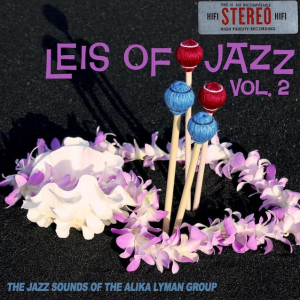
In 1957, after several years of working with Denny, Lyman left to start his own band. He released his first album that same year, Leis of Jazz. The CD I’ll be reviewing is a reissuing of his fourth and sixth albums, Bwana á and Bahia.

Continue reading

06/29/10

Freaky Tiki Surf-ari: The Sound of Tiki

It all started when Strange Jason sent me a link to “Gateways to Geekery” article about exotica music from the Onion AV Club. Not only was it a great, highly informative read (although the author is laughably wrong about the quality of modern exotica groups), but it made me realize the connections between exotica/Tiki culture and horror.

My realization of this was sparked by noticing how menacing the idols depicted on the cover for Les Baxter’s Ritual of the Savage looked. This got me to think of how masks play a big role in both fandoms and inspired me to do further research into the matter. I soon realized that exotica was not necessarily all tropical flowers and sunshine. There is a darker aspect focusing on the forbidden and taboo. There’s the shrunken heads of Arthur Lyman’s Taboo II, Robert Drasnin’s Voodoo series and songs (and album covers) involve frenzied pagan rites, weird cries in the night or strange stone gods on forbidden islands. Is the intended goal of bringing customers into an artificial environment filled with spooky sounds sought by the designers of haunted attractions really all that far off from the goals of those who make Tiki bars and put the animal calls in many an exotica song? And let’s not forget the popularity of “zombies” in both Tiki and horror cultures…

Some of you are bound to be asking yourselves questions like “What exactly is exotica,” “what is ‘tiki culture,’” and “how does the surf music fit in?”

It’s tempting to take the easy way out by linking to some very informative websites on the matter and then move on to the next review. Instead I’ll explain things by reviewing a CD/booklet combo by the renowned Tiki authority, Sven A. Kirsten.


The term “Tiki” refers to Polynesian carvings of roughly human shape (be they stone or wood, mask or figurine). As noted here, Reeds’ Concise Maori Dictionary even defines it as a “grotesque carved figure of a man.” Although I could use the “grotesque” definition to further the Tiki/horror connection, I won’t because I disagree with it. Tiki art is rather “off beat,” but is rarely what I’d consider “grotesque.” That said, I so see how the the idols depicted on the cover of “Ritual of the Savage” could meet that definition. Unsurprisingly, the source where I learned of that particular definition also chose to drop the grotesque part and used the definition “human-like images not only from Polynesia but from other Oceanic areas.”

The original symbols were often references to the legendary first man of the Māori (and other cultures’) creation myth, Tiki. However, some claim that Tikis act as identifying “flags” of sorts. Although these figures were brought overseas as souvenirs during the 19th century, they did not become truly popular until the 30′s-40′s. A variety of factors contributed to this. Donn Beach started the first “Don The Beachcomber” restaurant/bar in 1934, which gained fame (and other locations) due to its tropical drinks and Polynesian decor (including Tiki figures). Although some of the figures in the early establishments might have been authentic imports, most of the Tikis used were made in America. Its popularity spawned numerous other restaurants with similar food, drinks and decorations. The best known one is Trader Vic’s, which originally started under the name “Hinky Dinks.” Even before adopting the Tiki theme, the walls of Hinky Dinks were covered in unusual decorations in order to spark customer conversations due to owner Victor Bergeron’s belief that “lots of decoration causes lots of conversation, and lots of conversation sells lots of drinks.” A Caribbean vacation is credited as planting the initial seed of the tropical theme change, with visits to restaurants already using that theme sealing the deal. “Hinky Dinks” was renamed “Trader Vic’s” to fit in with the new style, the name inspired by the owner’s constant trading. “Don” and “Vic” both churned out innovations that have since become staples of Tiki bars worldwide such as Mai Tais, Tiki mugs, Zombies and the like.

The popularity of Tiki culture was furthered by those returning from the South Seas after being stationed there in World War II. They longed for the exotic sights and cuisine that had originally distracted them from the horrors of war. One returning naval lieutenant, James Michener, wrote the Pulitzer Prize winning book Tales of the South Pacific based on his experiences in 1948. This popular novel was adapted into the even more popular Rodgers and Hammerstein musical, South Pacific (which also won a Pulitzer). The Kon-Tiki expedition and Hawaii’s statehood also fueled people’s passion for all things tropical. Tiki bars sprung up all over the country and music was needed for them. Surf music was a good fit, but there was something even better suited. A genre that gained its named from a now-classic Martin Denny album: Exotica. Exotica music is designed to help the listener imagine they are in some faraway land, with animal cries and the use of “exotic” instruments such as güiros and chimes. As with all things that become a nationwide craze, Tiki culture eventually died down. It wasn’t until the 90′s that Tiki culture started to make a comeback. Aiding in the modern day revival were the excellent books on the subject by Tiki historian/expert Sven A. Kirsten.

"I was *this* close to being the mascot for Cold Fusion Video Reviews..."

All of the above (and more) can be found in the 49 page booklet attached to the digipak holding the Sound of Tiki CD. The CD was originally planned as a bonus CD to be included in Kirsten’s The Book of Tiki, but the idea had to be dropped in order to keep the price reasonable. And just like the book that spawned it, you’d better believe that the CD’s booklet is chock-full of color pictures (be warned that some of the images contain nudity). There’s also a handy map of the “islands” surrounding the inlet of exotica music: surf, hapa haole and lounge.

Rather than just act as a condensed version of his two prior books, the booklet is actually set up in a way that (after a few introductory pages on the subject of Tiki and exotica) the notes for each track of CD give information both about the song and how it ties in with Tiki culture. I was particularly surprised to learn that in the unofficial competition to use the most obscure instruments among the world of exotica musicians, one album boasted of using an instrument said to be made from human bones! As for the tracks themselves, the CD’s selection of rarities and classics is enough to satisfy the hardcore Tiki fan while still being accessible enough to act as an introductory sampler for beginners.

The first track, Arthur Lyman’s “Taboo Tu,” actually has a horror connection, despite the pleasant tone. Kirsten notes that while hapa haole songs tended to be about romance, exotica focused on the mysterious and taboo. He even comments about horror imagery and primitive cults!

Next comes a song from another master of exotica, Martin Denny. Not only is “Aku Aku” a delightful song, but its page in the booklet explains how the name ties in with many Tiki establishments and explains how Moai (aka Easter Island heads) got mixed into Tiki culture. Gloria Lynne’s performance of “Bali Ha’i” is not only included since it came from the play South Pacific, but also because it showcases the idea of a friendly and welcoming exotic isle of delights that is so popular in exotica music/Tiki culture. Oddly enough, the introduction to the song sounds like something out of a sci-fi movie!

Speaking of movies, it’s amazing to think how a soothing song like Les Baxter’s “Bird Of Paradise” could come from a man who’s scored several horror movies. Paul Page’s use of a steel guitar for “Castaway” will make many modern listeners think “SpongeBob SquarePants.” This is no mere coincidence, as the show is influenced by surf, Hawaiian and Tiki cultures. After all, Spongebob lives in a pineapple, Squidward dwells in a Tiki-style house and the music can speak for itself. The use of seagull cries also adds to the exotica effect of the song.

Martin Denny returns and teams up with Si Zentner to play “Tiki,” whose authoritative start and playful vibraphone notes reflect the status and mischievous nature of the legendary first man. Although the establishment described in Andy Williams’ “House Of Bamboo” is most likely not a Tiki bar, the lyrics do accurately describe the heavy use of bamboo in such bars. Besides, if this thin connection is good enough to include this great song on an exotica compilation, then it means I’m not too off-base for reviewing this for a horror site!

The Shadows’ “Kon-Tiki” is an exotica-tinged surf piece whose beat conjures up images of Thor Heyerdahl’s raft bobbing gently in the waves on its long journey. Marais and Miranda’s “I-Ha-She” is a musical tale of a native maiden rejecting the unwanted advances of her village’s ruler, which sounds like an excerpt from a long-lost Rankin Bass “Animagic” special set in the south seas. I especially liked the clever way they worked the chorus of men calling I-Ha-She’s name into the context of the story.

Next comes Buddy Morrow’s “Hawaiian Eye,” the theme song to the TV show of the same name. The accompanying notes detail the influence of Tiki culture on the show (as evidenced by the heavy use of animal calls in the opening) and vice versa. The Mary Kaye Trio’s “Hilo Boy” is a very corny song about a boy leaving his village in order to search the world for a bride (GUESS WHERE HE FINDS HER), but it does give Mr. Kirsten the opportunity to show their contribution to the birth of lounge music. Despite the band name, The Surfers’ “Ulili E” is not a surf song. Instead, it’s a traditional Hawaiian folk song (although not played in a way that one would associate with stereotypical folk songs).

Paul Page brings us more steel guitar goodness with “Pieces Of Eight,” a song from an album he sold at select Polynesian-themed restaurants. You see, he name each song on the album after a restaurant he had an agreement with and sold the record under a different title at each location. Naturally, the album was called “Pieces Of Eight” when it was sold at the establishment under that name. Despite the name, Eden Ahbez’s “Full Moon” has no horror ties. Instead it’s a hippie/hermit-style exotica, complete with croaking frogs. The Surfman’s performance of “Bamboo” is marred by the hilariously awful fake bird calls that sound like someone puking (which is one of the main reasons it was included on the CD). Next comes a Don Ho twofer, wherein he adds lyrics to the theme from Hawaii 5-0 and “Quiet Village.” The final track is a series of “Luau Is Calling You” radio jingles for a Polynesian restaurant.

It may seem odd to review a CD with little to no horror-related content on this website, but it makes perfect sense to me. After all, we can’t have shadows without light. For example, Tiki masks come in a wide variety of designs. While a regular mask may or may not be interpreted as being scary, tiki masks like this leave no doubt as to the scare factor (but can also obscure what your average Tiki is really like). Also, many of the songs on the CD are also referenced in other albums that will be covered in future Freaky Tiki Surf-ari updates! Stay tuned!

Special thanks to Bear Family Records for the review copy!