"What is he that builds stronger than either the mason, the shipwright, or the carpenter?"
Header image

DONATE HERE

Kickstarter has become the number one “crowd-funding” sites out there, mainly due to high profile people using the service.  I’ve talked about it in the past, both with Transylvania-TV’s Halloween Special and mentioning the service in a write up about the remake/prequel/sequel of the 2006 movie Behind the Mask (aka Before The Mask).

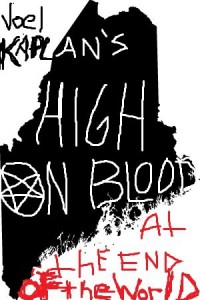
Friend of the site, Joel “MAX REVERB” Kapland has recently written a grindhouse-fantasy novel entitled HIGH ON BLOOD AT THE END OF THE WORLD. Joel’s a man who, despite currently living in Florida, bleeds the blood of a Maine man. You can tell from the picture he’s got for the proposed book. Don’t let the MSPaint fool you:

Joel is a member of the Necro-Tone family. He has played with The Crimson Ghosts, The Quasi-Men, maybe the Demon Seeds (I can’t really be sure, but I wouldn’t be surprised) and possibly The Disconnect on one of their two-three shows. He’s currently in Gigi and the Cretins down in Florida and this is a way to help this punk out. He’s self-publishing the book and every pre-order (depending on the pledge level) gets you some sick rewards. You can even be a character in the sequel (if there is a sequel, and well. There’s always a sequel.)

Help a cretin out.

DONATE HERE

Disclaimer: Kickstarter has its downsides. First off, if you overstate your goal and don’t make it, you get NOTHING. Let’s say this: You put your goal at 1,000 dollars. You manage to get about 800 pledged and reasonably, you can get your project made with that amount of money. But because you don’t make the 1k in time, you get nothing. In order to ensure that you get SOME money, you likely have to understate your budget.

In addition, depending on the project/budget, that 1000 dollars is subject from anywhere to 8-10% in fees (5% to Kickstarter, 3-5% to Amazon.) Middlemen! There are additional sites with their own caveats, so pick and choose if you ever look towards the masses online to help fund you.

So Joel has his goal at 1000 dollars. He’s got six weeks to make 355 dollars in order to qualify for funding. He made it so that the smallest amount of books run off in this would be 50, at 20 bucks a pop. In addition to that basic pledge of 20, you get your book signed, a sticker AND a mix-CD from Joel himself. This is punk rock.

I’ll be plugging this for a while (over on Twitter and on the podcast) so if you want to stop hearing about this, donate and get your friends to donate. He only needs about 18 more people to buy the book and bam! Success.

title of the collection Looking At The World With Broken Glass In My Eye by Mark Justice is all the preparation you need before you dive in, as it sets the tone as to the humor and horror of the stories published in this collection from Graveside Tales.

Mark Justice has a dark humor to him that really packs a punch. It helps him make his horror that more sinister, as there’s always an edge in every joke, a little bit of poison in every bit of hope that might possibly be found within this book of his.

There are entries in Looking… that don’t mask their nature of being straight-premise based works. These smaller pieces are the vaudeville hosts cracking jokes in between the bigger acts, the palate cleansers between meals so that the reader isn’t overwhelmed if they go at it for one setting. “What if Death had an Agent?” Mark Justice asks in ‘Agent of Death.’ “Or, what would happen if the mythological pantheon of gods were to retire?” he inquires in ‘Nursing Home of the Gods.’

These almost-micro-fiction stories are written with a more irreverent tone. This tone is the winking eye that clues you in, the way Justice says “we won’t get a lot of mileage out of this idea but let’s enjoy the ride while we can.” Justice could have overwritten these stories but instead, chose brevity. The shorter stories are also stages for Justice’s twisted sense of humor.

The longer stories are perfectly fit for Mark Justice’s perspective, as he comes up with characters, voices and ideas that flourish with the breathing room. While the genre of ‘occultism alternative WW2 history’ isn’t all that radically new, I think Justice could offer a great contribution to it if ‘Das Hollenfeuer’ is any indication. ‘Father’s Day’ had a great take on vengeance and anger, and ‘Song of the Bones’ is a legitimately creepy story, especially since I recently moved to a densely metropolitan area.

Mark Justice is a showman with his fiction. There’s a great deal of entertainment in Looking… and I think that any horror fan should definitely pick this up.

Three major works divide up the collection, though the ‘Deadnecks’ story, split into two sections, bookends the work. ‘Dead Town’ marks the middle with ‘The Autumn Man’ anchoring the tail end of Looking….  Two of the three are set in Justice’s native Kentucky and deal with a lot of the perceptions of the area. Justice has written a lot about that part of the world, which holds a lot of eldritch mysticism to it. While the instant connotation of the ‘south’ bring sup the characters you’d find in ‘Deadnecks,’ the story, a twist on the zombie holocaust trope, is oddly comedic and strangely heartwarming. Even though it’s a story about being zombies, Justice makes the characters and, essentially, rednecks seem very human.

The differences between the nature of the supernatural in the other two stories – ‘Dead Town’ and ‘The Autumn Man’ –were stark and displayed how Justice has tried to expand himself as a writer. ‘Dead Town’ reads, to me, as a very urban, horrifyingly cold take on the world. It’s all buildings and concrete, whereas ‘The Autumn Man’ is very—surprise, surprise—nature, very wet, very alive.

While he maintains a signature voice when it comes to humor, drama and bleak terror, the stories in this collection are not repetitive. There is a great amount of variety here that whoever picks it up will find something to enjoy in Looking At The World With Broken Glass In My Eye. I definitely recommend it.

Mark Justice (with David T Wilbanks) has written two books in The Dead Earth series: The Green Dawn and The Vengeance Road. His forthcoming 2012 release is the western horror, The Dead Sherriff. You can hear Mark Justice on the horror literature podcast, Pod of Horror.

Thanks are given to Graveside Tales for providing the review copy. 


Yellow journalism? Hardly!

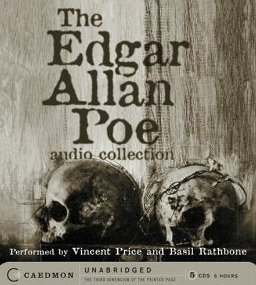
Although the name might make one think of a collection of episodes from the famous old time radio series, this is actually a reissue of a Tangled Web Audio release featuring Geraint Wyn Davies narrating classic short stories (although AudioGo has released a collection of episodes from the British version of Suspense). As was the case with the last review on the matter, just last his last appearance here, Davies effectively reads a fine selection of spooky tales. Said tales include “The Oval Portrait” by Edgar Allan Poe, “Ethan Brand” by Nathaniel Hawthorne, “The Yellow Sign” by Robert W. Chambers, “The Upper Berth” by Francis Marion Crawford and “An Occurrence at Owl Creek Bridge” by Ambrose Bierce. “The Oval Portrait” details the horrific discovery made by a traveler as he delves into the history of a painting he finds in an abandoned mansion. Personally, I suspect this story was an influence on H.P. Lovecraft’s “The Picture in the House.” Although the collection is advertised as featuring unabridged stories, that may not be the case for this particular tale. Apparently the story was originally published as “Life in Death” and a shortened version was republished under the title used in this collection. Not being able to find a copy of the original version to read, I am unable to verify whether or not this is truly uncut. “Ethan Brand” effectively begins with a father and son being startled by the sound of the unnerving laughter that heralds the arrival of the titular character, who is in search of unpardonable sin. According to this, Hawthorne wrote this after a lengthy period of not having written anything and had originally intended it to be the first part of a larger work. This probably explains why it starts off strong and gets less satisfying as it goes along. I should also note that Brand’s comment to a Jewish character would not play well today, given certain events that happened in WWII.

“The Yellow Sign” is a selection from Chambers’ The King In Yellow which concerns the terrible events that unfold when two lovers decide to read an infamous play. Although H.P. Lovecraft incorporated certain things from The King In Yellow into the Cthulhu Mythos, audio versions of the Chambers originals are sadly all too rare and this is a welcome treat. “The Upper Berth” is easily the most chilling tale in this collection, wherein the investigation of why passengers of a ship keep throwing themselves overboard after staying in a certain room yields supernatural results. Finally, “An Occurrence at Owl Creek Bridge” is so famous and so well-taught in schools that I probably don’t need to describe the plot. For the few that haven’t read it, let’s just say that this tale of a Civil War soldier’s hanging isn’t quite what it appears.

The narration by Geraint Wyn Davies both draws out the most suspenseful parts and draws the listener in to the point that it makes the 2 hour and 49 minute total running time seem to fly by. As was the case with Great Classic Horror, the collection’s 3 discs are packaged in a 3 panel cardboard slipcase held in a cardboard box. In short, this is a must-buy for all horror audio book enthusiasts.

Special thanks to AudioGo LTD for the review copy!

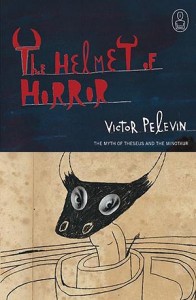
Inadvertently, I expanded my horizons when I bought a copy of Victor Pelevin’s The Helmet of Horror, which was due to a few superficial flaws in the consumer culture embedded in both myself and the used bookstore where I purchased the copy.

First off, I probably wouldn’t have bought it, or found it at all, if the bookstore hadn’t combined its horror with its science fiction, creating one large section for the ugly mutants that read “those kinds of books” can shuffle with heads bowed and eyes diverted from looking at any other ugly mutants while the rest of the shoppers pick from “real” literature. Granted, this was a store that had a table ‘curated’ by Chuck “Pencilneck” Klosterman where the store’s supply of Max Brooks’s World War Z was situated (and still going for fifteen bucks a pop. Really? In 2011? C’mon.)

If there wasn’t a horror nerd at the helm, I wouldn’t be sifting through all the TOR paperbacks and Dean Koontz, trying to find something that was horror-based but didn’t involve vampires and/or zombies. Despite its horrific elements, The Helmet of Horror isn’t a straight up horror novel. It’s not a straight up anything type of novel.

On the service, specifically the back cover, it is a “radical reinvention” of the myth involving Theseus, Ariadne and the Minotaur. Inside, it’s a bizarre philosophically driven tale that resembles the ‘Cube’ movies more than a Greek myth. Eight characters are connected to one thread (an internet forum thread) and they are only connected via the ‘internet.’
I enjoy myths and monsters, so I purchased the book. I flipped through the pages and saw that it was structured strictly in ‘dialogue’ or the interaction between each user on the thread. It wasn’t a chat log, mainly because there was no timestamp. The concept of time is a construct solely that of the reader’s mind, which is something that Pelevin enjoys in his literature. He isn’t prone to interviews so what little he has said about his writing style has been translated into “the reader who infuses the text with meaning.”

Translate is the key word here, since it wasn’t until half-way into the book that I discovered that Victor Pelevin is Russian and that this novel was translated by Andrew Blomfield. Which, I could easily chalk up as the reason why I was overwhelmed by the philosophical lasagna that gets served up half-way through the book’s discourse, but in truth, the idea here is that there is clearly a lot of intricate thoughts presented.

This is a book that doesn’t rely heavily on plot, instead focusing on character interaction to drive the story. The dreams by the user Ariadne involving the creature known as Asterisk are the cohesive story-line (a ‘thread,’ if you will) while the interactions of others (the lovers Romeo-y-Cohiba and IsoldA, the drunk Sartrik, the sarcastic Organizm(-: and wise Monstrodomus) allows the reader to create the world that they inhabit.

It’s a bizarre book that requires a couple of reviews to get down completely. I haven’t gotten it down completely. The section that describes the parts of the Helmet of Horror, something too small for anyone to actually wear so to put it on means to BE the Helmet of Horror, is complicated and includes a bit of absurdist flair. The ending is also a bit confusing and requires a deeper analysis. If you start this book, you will breeze through 3/4ths of it with that extra quarter holding you up as you try to understand what happened.

It’s enjoyable. There wasn’t a point where I wanted to put the book down. The interactions are enjoyable to read and Pelevin has done a lot of research when it comes to the history of labyrinths and how they relate to each character in this story. It’s not a strictly horror tale but if you like your science fiction coupled with religious imagery and monsters, it’s definitely worth a read.

Plus, it’s good to reach out and read different works from different countries. I don’t know Russian from Greek but thankfully, Pelevin has his work translated to English. It also had me look up The Master and the Margarita. Make your Sunday Reading an international one.


3 CDs, 6 tales and too many chills to count!

While I have reviewed many audio dramas from AudioGo in the past, this is the first time I’ve ever reviewed a audiobook. Sure, I’ve reviewed audio drama/audiobook hybrids before, but this is new territory for me. And you know what? I liked it. I still prefer audio dramas, but this was a fun change of pace.

Back when this collection of 6 unabridged stories was originally issued as an audio cassette release, it was a Tangled Web Audio release called Hauntings: A Classic Collection. Later it was released by BBC Audio under the name Great Classic Hauntings. In keeping with the change, a new (but brief) introduction was recorded to reflect the title. However, the narrator for that segment is not the same as the narrator for the stories themselves, Geraint Wyn Davies. Readers of this site might remember him from Forever Knight or Cube 2: Hypercube. Davies is an excellent narrator, whose voice is serious and offers an almost factual tone to the various tales of terror. He also acts appropriately excited at times and his “lapsing” into his accent is a great touch when he portrays certain characters. Although he adopts a distinctive voice for each character, the effect is nothing like an audio drama. Davies also wisely avoids using a falsetto when portraying female characters, as such an unintentionally comedic effect would clash with the theme of the collection. Without any backing music, his voice is given the stage it needs to completely entrance the listener, which helps with the illusion that someone is really reading a story to you.

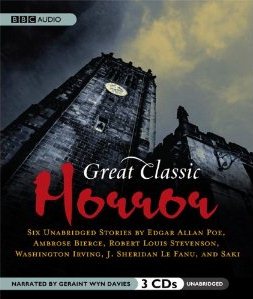
Speaking of stories, Great Classic Horror features “A Watcher by the Dead” by Ambrose Bierce, “Dickon the Devil” by J. Sheridan Le Fanu, “The Adventure of the German Student” by Washington Irving, “The Body Snatcher” by Robert Louis Stevenson, “The Fall of the House of Usher” by Edgar Allan Poe and “The Open Window” by Saki. “A Watcher by the Dead” shows why betting a man to sleep in a room with a corpse in it is never a good idea, while “Dickon the Devil” is an interesting look at how both the living and the dead can haunt a house. “The Adventure of the German Student” details what happens when a visiting student meets a strange woman during the French Revolution and also seems to be the great granddaddy of a classic ghost story involving a ribbon. “The Body Snatcher” (mistakenly referred to as “The Body Snatchers” by Davies) deals with two men who handle bodies for dissection for a medical school and what happens when the body of someone who was perfectly healthy earlier in the day arrives and “The Fall of the House of Usher” needs no explanation. What I will say is that it’s technically two Poe works in one, as he included his spooky poem “The Haunted Palace” in the body of the text and that it’s easy to see how this story influenced the writing of H.P. Lovecraft. Finally, “The Open Window” is a very interesting tale where a young girl’s explanation for the titular open window in a room has an unexpected consequence. It should also be noted that “Saki” is actually a pseudonym for author Hector Hugh Munro and how many online product listings mistakenly refer to it as “The Open Watcher.”

AudioGo has chosen a fine selection of stories from classic horror authors and interestingly opts not to go with some of the more famous stories by certain authors. For example, Irving’s “The Legend of Sleepy Hollow” could have easily fit into this collection, but the use of his more obscure ghost story made for a much more exciting and mysterious time. Speaking of which, the complete running time is 2 hours and 40 minutes, with two stories being contained on each of the 3 discs (which are enclosed in a 3 panel cardboard slipcase held in a cardboard box). Not only is this collection a great way to entertain one’s self on long trips, but it also offers some interesting potential for your next Halloween party. Telling ghost stories is a time-honored tradition at such events, so why not play material from Great Classic Horror to enthrall your guests? I recommend going a step further and creating a “storyteller” figure to add to the effect. You can use tutorials like these two to show how to give your storyteller a moving mouth that is synchronized with the audio or you can opt for a dummy using an “Invisible Ghoul” mask if you don’t want to bother with electronics. That said, including glowing eyes such as the ones from this variant of the “Invisible Ghoul” concept would make a great touch.

Special thanks to AudioGo LTD for the review copy!

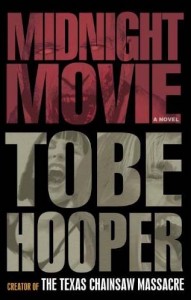
Midnight Movie
By Tobe Hooper and Alan Goldsher
Three Rivers Press
Available now on Amazon in Paperback and Kindle format

 -

In Midnight Movie, Tobe Hooper and Alan Goldsher have successfully written a grindhouse novel. There is sex, there is violence, and there is unrepentant excessiveness that sometimes goes without explanation, daring you with its middle finger to try to find some rhyme to its reason. It’s a wild read and a definite addition to your library if you enjoy slashers, grinders or the cocksure attitudes of independent art.

Placed in an alternate-set reality, a fictional Tobe Hooper is contacted by a character going by the name Dude McGee about a possible screening of Hooper’s first, unreleased movie: a no-budget feature called Destiny Express. Securing a spot in an Austin dive bar during South By Southwest, Hooper watches his movie (essentially for the first time, since his memory isn’t what it used to be due to a car accident during childhood that both cracked open his skull and killed his best friend) along with a group made up of fans and clueless bystanders. Shortly after, the world turns to hell, death and fire, with all signs pointing back to Destiny Express as being the cause of what might be the end of the world.

The concept is really clever, something akin to The Ring/Ringu, where after witnessing a piece of media, death will befall the viewer. However, instead of being passed from one to another, it takes only one showing of Destiny Express to kill a lot of people. Ergo: Never doubt the power of Tobe Hooper.

Arson, drugs, bombings and zombies infest this world turn to madness by the power of independent cinema. Told from the first person of those who experience and survived the trials, affectionately referred to as ‘The Game,’ the book is framed that it’s the journalistic efforts of the book’s co-author, a fictional Alan Goldsher. There are blog posts, declassified records from the Department of Homeland Security, even Twitter feeds. These clever real-world puzzle-pieces form a believable tale as if it were to actually have happened in 2009.

Though clever they may be, Midnight Movie’s methods would have some greater strength if done in a more-visual medium. Hooper is a movie-man and he has done his best to adapt his movie-mind to the method of print. Now normally, I’m against the idea of turning every book into a movie (we’re at the point that in order to get an original idea made in Hollywood, there needs to be a book, game or poster first.) However, I would think that Hooper, given time and budget, could make a clever piece of cinema. However, since a part of the third act deals with the excruciating hell that is Hollywood, maybe wishing this to be made into a movie is a way to lose Hooper as a friend?

The ‘first person reporter’ situation might draw comparisons to World War Z, along with the use of ‘zombies’ in this book. However, Midnight Movie isn’t a zombie book; in fact, it’s more likely to George Romero’s The Crazies than Night of the Living Dead. I never got the impression that the affected in the book were zombies, but ghouls, victims affected by a plague. There’s a part in the book, specifically the in-book movie of Destiny Express that demonstrates the all-encompassing term of ‘zombie.’ Hooper was clever enough to detail this umbrella-term, especially it’s a young Hooper himself who speaks directly to the audience when he addresses it. You might be attacked by crows or by finches but lord knows, we call them both birds; they might be ghouls, voodoo or disease, but they’re zombies to you and me.

The story contains the gore and terror that is Tobe Hooper’s signature style. An interaction between the book’s main female protagonist and her ex-boyfriend contains Hooper’s prolonging-horror style that it might have been ripped out from Texas Chainsaw Massacre II. It was efficiently in capturing that idea of ‘despite your best efforts, the monsters are going to get you. You might think you’ve outsmarted them but at the last minute, they’ll snatch you up and gobble you down.’ It’s horrifying to watch but fun to read.

The second act tends to drag, since the story shifts slightly away from the cast of dynamic characters established in the first and focuses a lot on the effects Destiny Express has on the world. Hooper/Goldsher established some distinct voices with each of the characters not just in that first act but in the whole book; it’s that the ones I found myself attached to the most were in the first third of the novel. The second? Not so much.

In fact, one of the characters, Dude McGee, invoked some of my strongest reactions to a literary character in a long time. Though his physical appearance is described as “a low-budget Harry Knowles—big and bearded, but without Knowles’s charming sense of self-depreciation”, it’s his personality that makes me loathe him. He is a know-it-all, a slovenly lout whose grating demeanor got me. I actually had to pause my reading so I could skip ahead and find out if anyone was going to stop dealing with his sarcastic, gross tone and finally shoot him in the face. I loved that. That alone makes the book a success where they can make me hate something made out of words and imagination.

I don’t know if McGee was Hooper/Goldsher’s attempt to lampoon horror fans, or the type that seem to occupy Tobe Hooper’s world, but they created a wonderfully vile character.

There were a few other slip-ups, but they weren’t great detriments to the book. Despite showing their prowess in making distinct voices, having two unrelated characters use the same term for a fast-food joint (“Taco Hell”) was a distraction. Some of the excessiveness also worked against the book’s favor. The parts with Andrea Daltrey, whose affects of Destiny Express are more carnal than carnivorous (though there are bits of the latter in her story, as well) could have been slowed down. It seemed like her experience was fast tracked a bit too much that when her fate befalls her, there’s not that emotional connection.  It’s a shame but she was a servant for something greater and sometimes, we don’t get all that we’re due. Or, even worse, we get exactly what we have coming to us.

This is, what I think, the book’s ultimate underlining message. It’s presented in Tobe Hooper’s signature method, drenched in style and a grinning reassurance as the nihilism of life comes to reality. I think Midnight Movie falls perfectly into the Tobe Hooper oeuvre, that life is a tragic circumstance to be experience and endured without any kind of rational explanation at the end. Often, the survivors are left wrecked, traumatized and jaded in sense that those who died are the ones better off. It’s at the end of the Texas Chainsaw Massacre movies, at Poltergeist and it’s certainly at the end of Midnight Movie.

At the end of the book, there’s a brief Q&A with Tobe Hooper, explaining the autobiographical elements of Midnight Movie as well as his relationship with film and print. Hooper spoke about how he found film “limitless. [He] can do anything you can imagine, and because of that, it always is a challenge…” Similarly, there is a limitless appeal to the written word, but just like film, there are challenges. Though he has close to four decades of film experience, this is Tobe Hooper’s first novel, and a novel is a different beast than a film. As a first novel, it’s a successful step that allowed Hooper to test the waters. His voice and his style are adaptable to print. He concludes the Q&A stating he could do another novel. I encourage him to. Though with some cracks and bumps, overall, Midnight Movie is a good novel.  Fans of Tobe Hooper’s films will enjoy this and, even more, fans of horror and the culture around it will find it a chewy piece of reading to gnaw upon.

It’s currently on sale at all your major book retail options, both online and brick and mortar.


Barfodder: Poetry Written in Dark bars and Questionable Cafes
By Rain Graves
Cemetery Dance Publications 2008
www.cemeterydance.com

Poetry is hell; specifically, writing poetry is a hell to endure to create something that is terribly personal but to the point it twists itself inside out to achieve a universal state. Poetry, or ‘good’ poetry, requires a lot of discipline, akin to the highly skilled and highly lucky serial killers of fiction and fact. Poetry itself is a dance between disciplined skill and luck. Knowing what to include and what not include is hard to decide. It’s rough and sloppy work gets you caught quickly.

Barfodder: Poetry Written in Dark Bars and Questionable Cafes by Rain Graves (Cemetery Dance Publications) contains both the precision of a serial killer and the indulgences of a pleasure god. There are horrors both monstrous and man, pain both born in the lightless night’s imagination and in a day that is all too real.


“Skin flaps like a matchbook,
he says, and when I open
them up, it’s easier
to see the fire, however
Dormant, on the inside.”

-Slick Eddie Dog One-Fifty One, pg.189

Both noted horror literature dark entity Jack Ketchem and cemetery spurned comic author and novelist Neil Gaiman both inhabit the covers of this publication as well an in between the sheets, with poems both about and dedicated to the authors. I find it fitting as Ketchem and Gaiman represent the subject matter range I found in Graves’ poetry. There were moments of the horror of everyday life, accessible and hyper-believable, similar to the finest of Ketchem’s work. Other poems reached across the span of gods and planets.

Admittedly, I’m keener to the reality’s smaller workings when it comes to poetry. I’ve never been one for epic even before the word’s sheen was worn away to bone by the last three years’ overuse. When Graves reaches for the beyond in her works, I found myself, more times than not, on the ground, watching everything play out overhead. The show is on a grand scale but only until she brings it to a lower, human level, revealing a rich emotional content to her writing, only then do I find her talent. An example can be found in her poem “October 14” where she utilizes a voice that is both admirable and celebratory regarding a friend surviving getting hit by a car:

“Even morphine
cannot cure your strength
and
it never occurred to you
(to die)
just never occurred.”

-October 14, pg. 65


What a wonderful concept, that ‘strength’ is something to be ‘cured.’ Graves has a slight-of-hand mind that can catch you off guard with a slick twist of a word. Graves’s wit is to be admired but also, she has a sincere voice in her work and that alone is worth all the gold in the world.

“Delicate anvil,
Will you step off his chest
For just a moment,
So he will call?”
-Mothering, pg.151

Having something for everyone is a double-edged sword here. Barfodder’s expansive diversity means that there is going to be something that you will enjoy when reading this tome. However, this is a large book. Three to five individual books could be divided from this single collection, each with its own uniting theme and voice. Graves has the talent to possess a multitude of voices, each chosen for the right poem. But this massive collection of 100+ poems is something I usually would expect of a retrospective of a poet who has passed on. Thankfully, Rain Graves is still alive, and that means there will be more writing from her. I look forward to that.

Do pick up Barfodder, for it will be a great companion for this Halloween season. Be it a cover-to-cover read or a random thumb finding a specific page, there’s something for every day.

Given the sheer amount of humorous horror-related handbooks and survival guides, it’s all too easy to forget the idea that started it all: horror movie survival in general.

There must have been something in the air during the mid-to-late nineties. “How to survive a horror movie” emails were being forwarded left and right and 1996′s Scream poked fun at various horror tropes and cliché (perhaps this inspired the emails?). Not that it was the first to do so, mind you, as There’s Nothing Out There covered the same ground years earlier. In any case, it wasn’t long before such guides started appearing in print. Here are several examples, complete with previews:

The B-Movie Survival Guide by Gary Cook is a personal favorite of mine, as it also offers plenty of interviews and behind-the-scenes anecdotes from people involved in making b-movies.

The Horror Movie Survival Guide by Matteo Molinari and Jim Kamm differs from the others in providing advice on how to survive specific monsters and horror movies.

The preview for Survive the Movie Plot: Real Folks’ Survival Guide for Horror, Sci-Fi & Thrillers by K. E. Hawkins focuses solely on radioactive threats.

The Scream Queen’s Survival Guide by Meredith O’Hayre is, as the title implies, aimed solely at female protagonists.

How to Survive a Horror Movie: All the Skills to Dodge the Kills by Seth Grahame-Smith.

But let’s not forget the internet side of things. Although there’s bound to be some repeated material between the websites themselves and the books above, there’s enough original material between them to warrant their being listed here:


How To Survive A Horror Movie 101

Mira Grant: Horror Movie Survival FAQ

How To Survive A Horror Movie | Cracked.com

How To Survive A Horror Movie – TV Tropes.Org

Learn How to Survive a Horror Movie – TV Feature at IGN

Losthighway’s Twitter feed (Often has B-movie survival tips)

alt.cult’s Horror movie (and other cult films) survival thread (NSFW)

Time’s “Keep Your Pants On – Top 10 Ways To Survive A Horror Movie”

alt.movies.monster’s “How To Survive A Monster\Horror Movie” thread

Here’s some more advice from your friends at Gravedigger’s Local 16:

-Never go on a free trip you won in a contest you don’t remember entering.
-If a package isn’t addressed to you, don’t open it.
-I don’t care how good the scholarship package is, don’t go to Miskatonic University.
-Nothing good can ever come from grave robbing.
-Using a ouija board to talk to spirits is like a chatroom. Everyone lies about their name/age/gender and attempting a meetup will likely be unpleasant (to say the least).
-Always spell the name of a town with a weird name backwards before visiting.
-The more dolls a house has, the faster you need to get out of there.
-There’s a reason nobody goes to wax museums anymore. Don’t buck the trend…

Zombie, Ohio by  Scott Kenemore was the first real zombie novel I read. Eventually, I will have to read the Max Brooks contributions to the genre, especially with the movie of World War Z coming out. 

I think with the Zombie Saturation Horizon reaching critical levels, my aversion of all things Z was more of a timely going-with-the-flow. However, thanks to Dread Central this morning, I figure it’s time to go against the grain and check out V.M. Zito’s upcoming novel, The Return Man.

Much like Zombie, Ohio, the synopsis of The Return Man approaches the zombie apocalypse scenario from a different perspective. Where Kenemore put some philosophy to the undead’s existence, Zito will apply some more economical aspects. In the synopsis, the character Henry Marco is a “corpse tracker” who is hired by grieving families to return their zombified loved ones back to the grave. Along with the thriller of trying to fulfill a suicide mission contract while competing against a deadly assassin, the premise is ripe with a different level of emotional exploration that is just now getting a greater portion of the spotlight in the “—-apocalypse” fad of the last decades.

Creating a business of killing zombies to put the mourning families at rest is a pretty clever idea. It’s got my interest and hopefully, I’ll have a review of the book when it comes out in March 2012. Until then, you can go over to V. M. Zito’s site, check the blog and even read a few free chapters.  

There’s also a contest where you can have a character named after you in the book. Go here, fill out the question and submit. Who knows? You might end up a zombie or a grief-stricken employer that gives Henry Marco some work.  

Hodder & Stoughton will release The Return Man to major bookstores (which ones are left) in March 2012. I’m sure there will be an e-version of the book for all you Nook/Kindle/Pocket Reader types out there.  Get excited.


ARCANE Magazine
http://www.arcanemagazine.com/

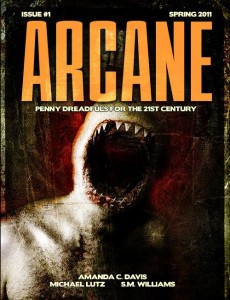
Madness would be a primary motivation for anyone looking to involve him or herself in the current day magazine industry, with subscriptions dying and print costs rising. Madness, I might then assume, guides the hand that created ARCANE, a new magazine that identifies itself as “penny dreadfuls for the 21st Century.”  However, the man helming the magazine is well versed in madness, so I am confident that in its existence, ARCANE will be an influential and highly enjoyable publication.

ARCANE’s editor is Nathan Shumate, creator of the late ARKHAM TALES that ventured into electronic distribution. With publisher Sandy Petersen, Shumate comes to this world more primed with eReaders, of kindles and nooks, with experience and a good sense of what can and cannot succeed in this perilous publication landscape. At $2.99, the electronic version of ARCANE #1, currently available, offers up twelve tales of terror at what you’d pay for two liters of brand name soda these days. For those of us who prefer the paper copy, a print copy is available for $7.99.

As electronic readers rise in sales and viable business models emerge in this new field, it’s going to be the way for writers to get their stuff read, let alone sold. Four months ago, the news broke that Amanda Hocking, a twenty-six year old writer, was a millionaire by using Amazon and its Kindle. Her fiction in recent favor: of the books she’s written, there is a vampire romance series and a self-discovery in an urban fantasy trilogy.  She made a cool two million before scoring a publishing contract with St. Marten’s press.

ARCANE, I think, looks to duplicate Hocking’s success. Normal literary journals like this run up in the 8-15 dollar range. The print version is the cheapest I’ve seen. Normal monster magazines are going to set you back ten bucks. So here’s a chance for you, dear consumer, to get your horror for cheap and immediately; it seems to me like a sensible deal (if not a clever lure for that impulse buy.)

Electronically, I would purchase this for three dollars. I would not be so quick to be parted from my money at the eight dollar price, even though it’s the same magazine full of the same stories. It’s not a concept of quality, but more that my impulse to purchase a magazine I am unfamiliar with is greater at a reduced risk. Why? I think at that lowered price for an electronic copy, both the money and the product retain a immaterial concept, a thought of “unrealness.” This might ultimately lead to disaster, but if the moment, new writers are given a chance to circumvent outdated methods that prevent them from being heard, I’m all for it.

The first of the quarterly magazine, ARCANE #1 provides twelve diverse tales with a similar take on the genre of horror fiction. Instead of capitalizing on the ‘splatterpunk’ ethos of gore and attitude, the stories of ARCANE are described as using “foreshadowing and dread” to build a creeping terror, a tribute to the old weird tales that influenced Shumate. Like minded writers and readers will find ARCANE to be delightfully twisted.

The tales “In The Place Where the Tree Falleth” by Michael Lutz and “The Mine” by Jason V. Shayer would fit in with the Blackwoods, Smiths and Lovecrafts. Both of those stories occur in a past setting, where “Hazards” by Justin Pollock takes a similar sense of terror in a modern world.

Humor is well represented with Jeff Cook’s “Darnell Behind Glass” and “Dear Management” by Tom Wortman. Each story has its horrific elements but the stories are written to reflect both Wortman and Cook’s individual dark humor.

Probably the most visceral of all stories in this issue is Stephen Hill’s “Laundry Night”, whose depictions of the story’s central antagonist were strong enough to give me a shudder.

S.M. Williams’ “Ricky and the Elder Gods” contains similar creepy crawlies, but with more action. It is an enjoyable read though I suspect it’s more of an introduction to a greater world of Williams’ creation.  I think that in the future, Williams will point back to this issue as the start of a future novel.  Similarly, the characters of Amanda C. Davis’s “Courting The Queen of Sheba” could power a whole short story collection.

Committing to diversity, ARCANE includes some fantasy elements in stories like Jaelith Ingold’s dark reimagining of the Hansel and Gretel fairy tale in “Gingerbread and Ashes” as well as William Knight’s dreamy conjuring of the tale, “A Requiem for Tarsenesia.” Each retains a creeping dread or terror and neither seems to be a placeholder or token; each stands shoulder to shoulder with the other stories in this issue.

There are some abstract, dementedly surreal pieces. “Hello Operator” by Donny Waagen is a very strange piece that warrants more than one reading to fully understand the subtle horror. Similarly, “The Hole” by Rob Errera is a slow burn, a story who aims to hint at the horror so it lingers in the corner of your eye long after you finish reading.

The short story is a hard dance to get perfect and every finished product is, in its own, a success. ARCANE has composed its first issue full of distinct and different voices, each offering a new take on the subject of horror, a different flavor of fear. I look forward to the second issue and would recommend it to anyone. It’s a collection of horror stories from contemporary voices. With such a artful eye selecting a talented variety, you’ll definitely find something to enjoy.

Big thanks to Blackgate, whose interview with Nathan Shumate provided the information in this piece.

That’s Not Your Mommy Anymore
By Matt Mogk
Illustrated by Aja Wells
Available on Amazon

I had to ask myself, “Would I buy this for Bethanista on her birthday?”

Bethanista is a cool girl who likes zombies, fairies, dancing and ice cream. She’s also seven. When after her mother bought Plants v. Zombies, Bethanista interest in the undead sparked and took off.

So when reading That’s Not Your Mommy Anymore, written by Matt Mogk and illustrated by Aja Wells, I had to consider if this would make a good present for Ms. Bethanista. She is the intended audience’s age, I suppose, though I can see how the novelty of this book would appeal to grown-ups.

(Full Disclosure, a copy of Dog Train by Sandra Boynton sits on my shelf, a gift I got because The Phenomenauts had a song on the CD that came with it. You’re never too old for a book.)

If your kid is cool enough, That’s Not Your Mommy Anymore is a great gift. I wouldn’t recommend it for any child at the age where they don’t have an abstract of the concept of death. This book, however, is perfect for kids who are into things that are scary, spooky and creepy.

Matt Mogk is the founder & Head Researcher at the Zombie Research Society (Full website here, the ZRS blog, and their presence over on Facebook.) If anyone would be fitted to write a children’s book about zombies, it would be him.

In writing, Matt Mogk shows some skill with a dexterous rhyme set. In the first scant eight lines, paired with Aja Well’s full page illustrations, Mogk establishes what makes a “Mommy,” expressing the acts and emotions of a loving caretaker. But as quickly as he sets up what makes a Mommy, Mogk draws a clear distinction, indicating that when she’s a zombie, that is indeed not your mommy anymore.

That’s Not Your Mommy Anymore is a book that acts as a warning. Never does it instruct children to combat their parents – no “go to the gun closet, lickety-split/and grab your father’s big boomstick.” I think children reading this book will not act out against their parents. It’s more of a precautionary tale that warns against a ‘zombie threat,’ than an instruction of how to combat it. Instead, it advises the children to hide, be smart and avoid the danger. These lessons can be easily transferred over to something more predominant (i.e. “real”) in a child’s life.

Aja Wells’ illustrations are playful and contain a sort of disarming whimsy, perfect for a children’s book. While the subject matter warns against the threat, a child reading this won’t be scared too much by the depictions of all types of zombies and acts of gore. Nothing appears ghoulish or grotesque enough to inflict nightmares. Still, Wells does a great job at managing the balance between horror of the subject and the gentile nature of the book’s intended audience.

I think it’s a really good book, and spooky parents reading it to their kids will have some hidden Easter eggs for themselves. From a spooky standpoint, it’s a great book. The language is clear enough that those learning to read could make their way through it and those with some skills would not get stuck on an indiscernible world, such like “indiscernible.”

Overall, it’s a good book. If Bethanista is still into zombies by the time her birthday rolls around, I might consider it. Though, with the way she’s taking to reading, she might ask for a copy of World War Z instead. I’ll talk to her mother about it. For everyone else, I say That’s Not Your Mommy Anymore is the children’s zombie book you’ve been asking for.


Scott Kenemore
Zombie, Ohio: A Tale of the Undead

(Check out Scott Kenemore’s Zombie Blog)

Zombie, Ohio starts off slow but like the titular creature, picks up momentum as the story progresses on to make a very enjoyable read.

Scott Kenemore has crafted the pacing of  Zombie, Ohio to follow, step-by-step, the progression/degeneration of the main character, Peter Mellor. After awakening from a car crash with a case of amnesia, Peter finds himself in a nightmare world with “walking cadavers.” What’s even more horrific, thanks to help from his best friend Sam, Peter finds out the type of man he used to be: a professor at Kenton College in Gant, Ohio who slept around, drank and cared not for anyone else.

“I, Peter Mellor, was a disappointment.”

Things don’t get much better after Peter discovers half of his skull is missing. There are very few situations where that would be an improvement, right?

In creating Peter Mellor, Kenemore made a believable character in an unbelievable situation. Zombie, Ohio turns to be a case study of Mellor, told from his perspective. As a Philosophy professor, Mellor is greatly suited to be the narrator of his tale. Beleivably, he doesn’t immediately develop a gung-ho attitude or becomes an instant zombie-survivalist. He fails, has odd successes that come at a price and contemplates the morality of his situation more than following a predetermined set of zombie-survival rules (that everyone and their sister has, nowadays.)

The origin of the zombies is never fully explained but it never becomes necessary for Kenemore to do so. It could be magic, bioterrorism or divine intervention, all hinted throughout the book. But the explanation of why the dead have risen would be only a novelty and thankfully, Kenemore doesn’t spend too much time on that route.

Instead, through the first-person perspective, Kenemore explains how zombies function. It’s interesting to have a firsthand account as to why a zombie is, or should be, a slow moving threat. Some things we as a living organism don’t take notice of become apparent in Mellor’s development. It’s these small details that add an extra bit of charm to the book. The small details are one of Kenemore’s strengths; as he populates the novel’s landscape with small bits of madness that really work well in establishing the atmosphere of despair.

Mellor retains the majority of his mental facilities after he zombifies, which is also never clearly explained but a exchange between him and Sam theorizes his ability to an odd mutation.  Kenemore’s use of language made it easy and the character of Peter Mellor was one I found enjoyable so when it came to the half-explained rationale how he can still function with a literal flat-top, I had no trouble going with it.

As one might suspect, bring a thinking-zombie made Mellor a one-eyed king in the land of the blind and hungry. He uses this to his advantage in clever ways, showcasing Scott Kenemore’s dark sense of humor. Humor doesn’t take the forefront in Zombie, Ohio but there are some moments where I found myself smiling along.

The location (the Ohio in Zombie, Ohio) is important. The wide landscape of a rural area allows for a desolate and lonely setting. In an urban location, where corners are tight and shadows are long, it’s easier to amplify the threat of a zombie horde. It’s a bleak situation, what can be easily attained if ever the reader has spent some time in an isolated, rural area. Kenemore’s setting is perfect in expressing the utter despair of the situation and I commend him for capturing it.

Also, by choosing a wide-open space to set the novel, Kenemore draws comparison between a zombie and any other herding animal. By stripping away a bit of the horror that makes a zombie a real monster, Kenemore presents the zombie as something more natural, if it can be thought of that way.

The story is divided among three parts: Peter Mellor first attempts to conceal his zombie nature; after an incident makes him reject humanity, he wholeheartedly accepts who he is; and in the last act, he must make the decision of who he’s going to be, either man or zombie. Along the way, the mysterious nature of his death is brought up and solved.

It’s a good read. It does have a slow start and there are some details in the novel that I personally wouldn’t have done. These things are personal aesthetics. Though the mystery of Peter Mellor’s death is a lure, it’s not as prominent motivator for the story. Some might fault a few off-notes but I wasn’t frustrated. In a display of his skills as an author, Scott Kenemore demonstrated a great mind of a storyteller.

In the end, Zombie, Ohio is definitely a good read. As a debut novel, it shows that Scott Kenemore has a great supply of wit, creative ideas and potential. I look forward to his future works. For those who want an interesting character study or those looking for a nice way to get into zombie literature with a neat character, I would definitely seek this book out.

Ah, cheesy monster jokes. They are a staple of any young, growing horror fan’s reading diet and they’re impossible to escape during October. As I don’t know whether or not directly posting jokes falls under “fair use” rules, I’ll avoid any potential trouble by linking to several previews of spooky joke books. So if you’re feeling nostalgic or simply need a few jokes to use, check out:

Monster Jokes by Ima Laffin.

More Monster Jokes by Ima Laffin.

Beastly Laughs: A Book of Monster Jokes by Mark Moore.

Monster Laughs: Frightfully Funny Jokes About Monsters by Michael Dahl.

Jokes About Monsters by Judy A. Winter also offers interesting photographs rather than use cartoon drawings of monsters like other joke books often do.


Spooky Sillies: A Book of Ghost Jokes
by Mark Moore.


Screaming With Laughter: Jokes About Ghosts, Ghouls, Zombies, Dinosaurs, Bugs, and Other Scary Creatures
by Michael Dahl is a bit of a cheat, as it’s padded out with several pages worth of animal jokes.

Giggle Fit: Spooky Jokes by Joseph Rosenbloom and Steve Harpster.

For those of you who want a steady supply of new horror jokes, just follow 1monstermatt, author of the upcoming Monstermatt’s Bad Monster Jokes Vol. 1, on Twitter.

Chicago TV Horror Movie Shows: From Shock Theater to Svengoolie
By Ted Okuda and Mark Yurkiw

I like Chicago. It’s a nice place that has developed its own style – CHICAGO STYLE – and attitudes. A lot of great music has come out of that city, along with great comedy and in this case, great horror hosts.

‘Chicago TV Horror Movie Shows: From Shock Theater to Svengoolie’ details the line of horror hosts and horror shows that have been on Chicago airways from inception. It details those shows hosted by personalities (Mad Marvin, Svengoolie and Son of Svengoolie) and those that ran the movies by themselves (Chillerama, Creature Feature, etc.)

The book is divided, with the greater half going to the history of Chicago’s horror television. The latter part is a series of appendixes – “100 Horror Movies,” “Collector’s Corner” and others that offer a great start to get further into the world of classic (and not so classic) horror.  It’s really expansive, showing both Ted Okuda and Mark’s Yurkiw’s dedication to the subject and their respective research prowess.

It’s really neat to read about Mad Marvin, played by Terry Bennett. Sadly, at this time, there is no video footage of the Marvin character online, only that of Terry Bennett hosting ‘Jobblewocky Place,’ the children’s television show that he also hosted. As Marvin, Bennett hosted with his wife, Joy, who was known to horror fans as ‘Dear.’ Never showing her face and speaking only in grunts, Dear often was ‘dismembered’ or murdered in odd fashion every week. In addition, Mad Marvin added a group of local jazzmen –“Mad Marvin’s Dead Beats” –to play during an ‘after show’ program called ‘The Shocktail Party.’

The characters of Svengoolie and Son of Svengoolie, both Jerry Bishop and Rich Koz respectively, could fill an entire book. This book offers good deal of bits and comedy, effectively conveying what made both Son of and the original Svengoolie so appealing. With Rich Koz recently celebrating thirty(!) years in broadcasting, perhaps he’ll get a book of his own. Until then, though, ‘Shock Theater to Svengoolie’ is a great entry.

Overall, it’s a great book for those who want to learn about Chicago-based horror and have a valuable guide all in one book.

Ghoulardi
Inside Cleveland TV’s Wildest Ride
by Tom Feran and R.D. Heldenfels

Buy here on Amazon

Tom Feran and R.D. Heldenfels book Ghoulardi: Inside Cleveland TV’s Wildest Ride documents how Ernie “Ghoulardi” Anderson, through the Ghoulardi character, captured the imagination and energy of Cleveland the way that a lot of the initial horror hosts did during the early sixties.

Ghoulardi existed for three years, 1963-66, which seems like a small amount of time. But to a teenager, three years is a lifetime and Ghoulardi was there during a period of Cleveland youth that may never come again, being a grinning joker ready to throw darts at Mike Douglas or to thumb his nose at the growing suburban sentiment of Parma, Ohio. Like the bad movies he was showing, he was there to say ‘this is our life, group. It might not be the greatest right now but we can make it work for the next couple hours.’

The book details the creation of the ‘Ghoulardi’ character, from his conception from make-up designer Ralph Gulko to the execution from jazz-loving and cool-talking Ernie Anderson. Ghoulardi goes over a good build-up on Anderson’s history, how he traveled from Boston towards Cleveland and the work he did prior to donning the van dyke mustache/beard and fright wig. His relationship with Tim Conway is discussed as is the general attitude towards Cleveland and how Cleveland took to Ghoulardi. It’s clear from reading Feran and Heldenfels’s book that Ghoulardi tapped into some youthful energy, capturing the budding imaginations of that Midwestern generation.

Ghoulardi is a good summary of the persona.  I would have enjoyed if there were ten to twenty more pages highlighting jokes, since there’s no real online video library. But Feran & Heldenfels do a good job in presenting an idea of Ghoulardi’s humor, of his aesthetic, of who the character was.  From reading this book, I got a good overall idea of Ernie Anderson in Cleveland, of his work on ‘Ernie’s Place’ with Tim Conway, of the time as Ghoulardi, of his charity work as the character and his less-than-charitable barbs he launched at the city that was his adopted home.

As all things, time was that which ended Ghoulardi. Had the character remained the counter-culture icon of cool he was before rock and roll, if the Beatles not changed the landscape of teenage hipness, Anderson might have remained in Cleveland for a little longer. Ghoulardi wasn’t a job, it was a persona. It was tied to attitudes and actions that Ernie Anderson had himself, to rebelling against management and authority and somehow getting away with it. It was a side to Ernie Anderson, one that would drive his golden Honda motorcycle through the television office during his weekend shift, from the lobby, through the hallways and into the News Director’s office; the part that said “you get a girl and you ‘poke ‘er’ while live on the air.

His success might have spread the character too thin, but it the world changed for Ghoulardi. He had, as a TIME magazine article once said, “caged nearly every teen-age mind in Cleveland,” but the mind is only caught for so long. Three years is a lifetime for the mind and when it was time to move on, so did Ernie Anderson. He left Cleveland and Ghoulardi behind.

Ghoulardi exists as an example of how to rebel and get away with it, that the rules that seem in place might be worth breaking, if not bending enough to have some fun. You can make fun of the movies. You can light off fireworks in the studio. You can look at your world around you with a loving eye but also point out its silliness. You can turn blue, stay sick and cool it.

Oh I'm not evil, I'm just...good looking?

Originally debuting as a self-published work in 1996, Edison’s Frankenstein is back in an expanded and updated edition that’s more than double the original’s page count (along with a tie-in DVD-R release of the film). And the timing couldn’t be better, because 2010 marks the 100th anniversary of the original silent Frankenstein film’s release!

Author Frederick C. Wiebel, Jr. presents a wealth amount of information in a way that never seems boring or “dense” to the reader. Not only does he chronicle the complete genesis of the silent film’s creation (including reproductions of short film’s “script” and intertitles), but the book also covers the history of early American cinema and the Edison company (along with biographies of the film’s stars and details on company founder Thomas Edison). Some horror fans might be tempted to skip the non-Frankenstein portions of the book, but that would be a very foolish mistake. I found the biographies of Charles Ogle (who played the monster) and Mary Fuller (who played Dr. Frankenstein’s fiancée) to be particularly interesting, due to how Mr. Ogle’s career changed and how Ms. Fuller was involved in the creation of movie serials. I was also surprised to learn that Warner Brothers and Universal both owe their existences to Edison Studios.

Other chapters cover the creation of Mary Shelley’s original tale, stage adaptations (and how they may have influenced the monster makeup used in the 1910 film), other Frankenstein films (and the 1910 version’s possible influence upon some), and the saga of formerly “lost” film finally getting released on home video. There are plenty of pictures from a variety of sources, with the ones from the titular film and other silents being of understandably lesser quality due to the well-worn nature of their source prints. A few other pictures are somewhat pixelated, possibly due to the conversion for the .PDF file for the e-book version (more on that later). According to an e-mail conversation I had with the author, there were no such problems with the original scans. On the plus side, most of the pictures look great and many of the Universal Frankenstein’s monster pictures should be familiar to (and please) monster kids old and new.

Like many, I had assumed the scant few film clips available from the film in the 90′s were the only usable scraps from otherwise completely deteriorated film reels. The truth was that there was an honest-to-goodness conspiracy to keep the film from being released in full!


You see, the only surviving copy of the film was purchased by a film collector named Alois Dettlaff sometime in the 50′s. Although he did work on preserving the film (including making copies), he did not realize the value of this particular acquisition until many years later. After inquiring among other collectors to see if they had copies as well, Mr. Dettlaff soon realized that he was the only game in town. But although the film’s public domain status allowed him to release it himself without paying any royalties, it also meant that anyone would be free to make and sell copies themselves the split second the film was made publicly available. So, aside from a few one showing only theatrical screenings, Dettlaff limited the film’s release to clips he licensed out. It’s almost unfathomable to think that a film described as being lost in countless books on horror movies (including ones written for children) could be shown without anyone catching on and calling a local news service. But it happened. It wasn’t until Fred Wiebel saw a clip on a television documentary and became inspired to see where it came from that the truth became known.

Edison’s Frankenstein chronicles the numerous difficulties Mr. Wiebel had in his dealings with the late Mr. Dettlaff, such as numerous cancellations for events and struggles over getting the film to be shown without a watermark. And then there’s the Dettlaff limited edition DVD (not to be confused with the DVD-R associated with this book) and the experiences that others had with him. The Oscar story is definitely not to be missed. Considering all that, it’s amazing the author didn’t just give up out of sheer frustration. Well, that, and discuss the trials and tribulations in a way that doesn’t demonize the deceased film collector. In fact, his final notes on the matter come in the form of a memorial of sorts for Dettlaff.

But what of the film itself? Buying the book directly from the author or buying the CD-R/DVD-R e-book combo will get you the restored DVD-R immediately, and those who get the paperback edition from other sources can still order it separately using the instructions found at the back of the book. The disc art is based on the labels used for Edison Records’ “Diamond Discs,” which gives it a neat “What if Edison made DVDs” feel. Said artwork is printed directly on the disc, so fans need not worry about any of the issues associated with homemade labels. It comes in a paper CD sleeve (unless you get the e-book package), but that should not be an issue for resourceful GdL16 readers.

The DVD’s start menu uses the image most commonly associated with the film as a background and has the film’s title act as the “Play” option. The 12 minute film itself is fairly straightforward: Dr. Frankenstein is a university student who has discovered the secret of life and plans to create a perfect human being. In a very Georges Méliès-style scene, Frankenstein prepares a bubbling cauldron in order to bring his creation to life. As you’ve probably guessed, this film is an early example of a book’s plot getting heavily altered for the movie adaptation. But his giddiness over the experiment soon turns to fear and revulsion once he sees what his finished creation actually looks like. Although he initially dismisses the matter as a bad dream, aided in part by the monster’s disappearance, the reality of the matter comes back to haunt him upon his return home…

The monster, with its wild hair and pointy elf shoes, is more likely to induce laughter rather than chills in today’s viewers. However, its claw-like hands are a nice, creepy touch and the monster looks very unnerving when it’s looming over its terrified, hiding under the covers creator(aided in part by the color tinting used in the scene). The orange tinting used for the sequence when the monster is forming in the cauldron is also well-picked, with that particular tint making the formation of the body resemble burning embers in a fireplace. Although it is rather easy to figure out how the effect of a moving humanoid figure being formed from smoke and ashes was realized, it’s still a pretty neat looking sequence. It, along with the mirror sequence, must have knocked the socks off the movie-goers of the day. The only tinting that could come off as odd to modern viewers is the use of blue tinting toward the end of the film. However, anyone reading the book will realize this was shorthand for scenes taking place at night.

Although it’s not Criterion Collection quality, this restored version of the film easily blows away other versions currently online. The transfer is artifact-free and while there may be some signs of print damage, but that is to be expected given the worn nature of the original print and how Mr. Weibel was only able to work with a watermarked and altered (new title and intertitle cards) copy. Thankfully, he was able to blur the watermark and it’s not very noticeable for most of film, unless you go looking for it. I actually mistook it for a sprocket hole the first time I spotted it. There is only one scene where characters move in the “fast motion” manner often associated with silent films, but it’s very brief. “Blink and you’ll miss it” brief.

Just as how he poured through old Edison company documents for information about the film itself, the author also used those documents to determine what musical cues would have accompanied the film and was able to obtain them from vintage phonograph cylinders! According to a very informative newsgroup posting Mr. Wiebel made about his one-man restoration effort (all painstakingly done on his personal computer), he purposefully didn’t clean up the scratchy thumps so as to better match the visual quality of the film. I have to agree, it’s a nice touch that compliments the film well. The “white text on plain black backgrounds” intertitles might seem overly simple and quickly made to those familiar with the more elaborate ones present in other silents. However, those who’ve read the book will know that’s how they actually looked in the original. It’s important to also remember that since Mr. Wiebel had to recreate certain elements of the film from scratch such as the intertitles and title card, this particular version of Frankenstein is copyrighted. Check out these sections of the US Copyright Office website if you don’t believe me. In other words, don’t rip the DVD transfer and sell/distribute/etc. copies. Mr. Wiebel worked very hard on this restoration and deserves to reap the benefits.

I understand that the arrangement of the text in the e-book version (available in both Word and .PDF formats) is different and several of the pictures are in color. No matter what version you choose, the book is still a must-have for both fans of classic films and horror films alike. For information on how to order your own copy, please click here.

Special thanks to Fred Wiebel and BearManor Media for the review copy!

Bad Behavior has blocked 1447 access attempts in the last 7 days.